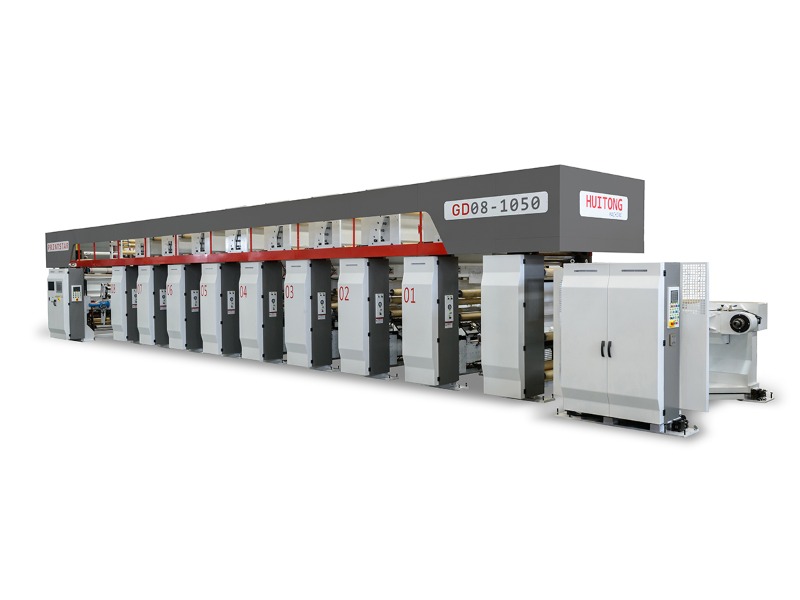
A snack producer we will call the plant manager in this example bought a printing press from one supplier and a laminator from another, each chosen for a good price and a strong specification sheet. Within the first month, the line was losing a large share of its output. The printed film arrived with slight registration drift, the laminator's web width did not match the press, and the tension settings on each machine pulled the film in opposite directions. Every roll that left the printing stage needed manual correction before it could be bonded, and much of it ended up as scrap.
The lesson is common across the packaging industry. A pouch is the result of a chain of processes, and each machine sets limits for the machines that follow it. Anyone evaluating flexible packaging machinery should look at the whole sequence of equipment, not just the price of a single unit.
A flexible packaging line is only as accurate as its weakest tension zone, its least consistent print registration, and its poorest seal.
Flexible packaging machinery refers to the group of machines that converts thin, bendable substrates into finished bags, pouches and sachets. The most common base films are BOPP, PET, polyethylene, nylon and aluminum foil, often combined in multi-layer structures to balance strength, barrier protection, heat sealability and appearance. These pouches serve pet food, coffee, snacks, dairy, pharmaceuticals, personal care and household goods.
Buyers usually separate the equipment into two categories. Single machines perform one operation, such as printing or slitting. A complete production line links several machines through a common web path, shared control logic and matched tension zones. Single machines suit plants that already own compatible equipment or that want to upgrade one bottleneck. A full line suits new factories and plants that want predictable output from raw film to finished bag.
| Machine | Main job | Typical films | Key quality check |
|---|---|---|---|
| Rotogravure printing machine | Applies graphics in multiple colors | BOPP, PET, nylon | Registration accuracy |
| Laminating machine | Bonds two or more film layers | PET, PE, aluminum foil | Bond strength |
| Coating machine | Adds barrier or functional layers | PET, BOPP, paper | Coating weight evenness |
| Slitting machine | Cuts wide rolls into narrow reels | All printed and laminated films | Edge straightness |
| Print inspection machine | Detects print and surface defects | Printed films | Defect detection rate |
| Bag making machine | Forms pouches and seals edges | Laminated structures | Seal strength and seam integrity |
A complete line follows a logical sequence. Each stage prepares the film for the next, so an error at one point usually grows as the web moves forward. The diagram below shows the typical flow.
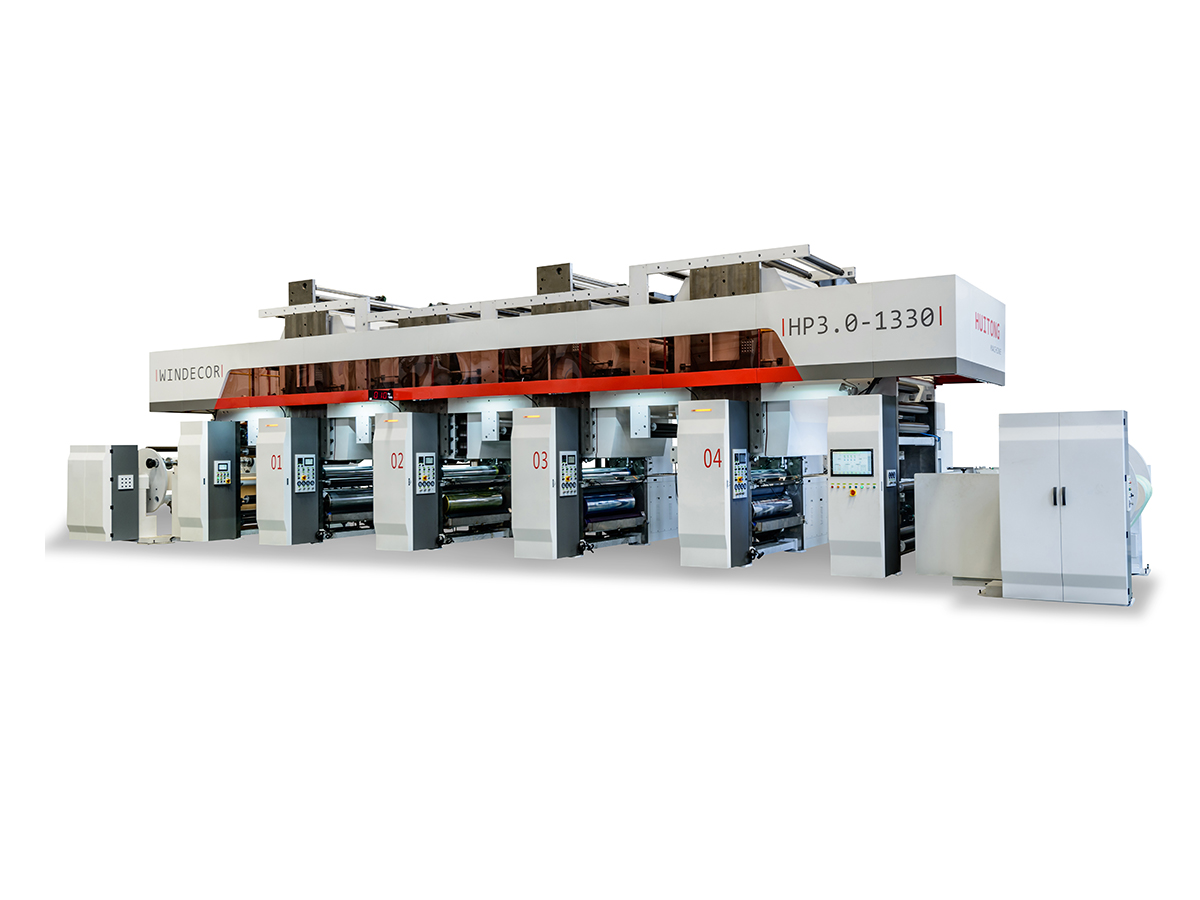
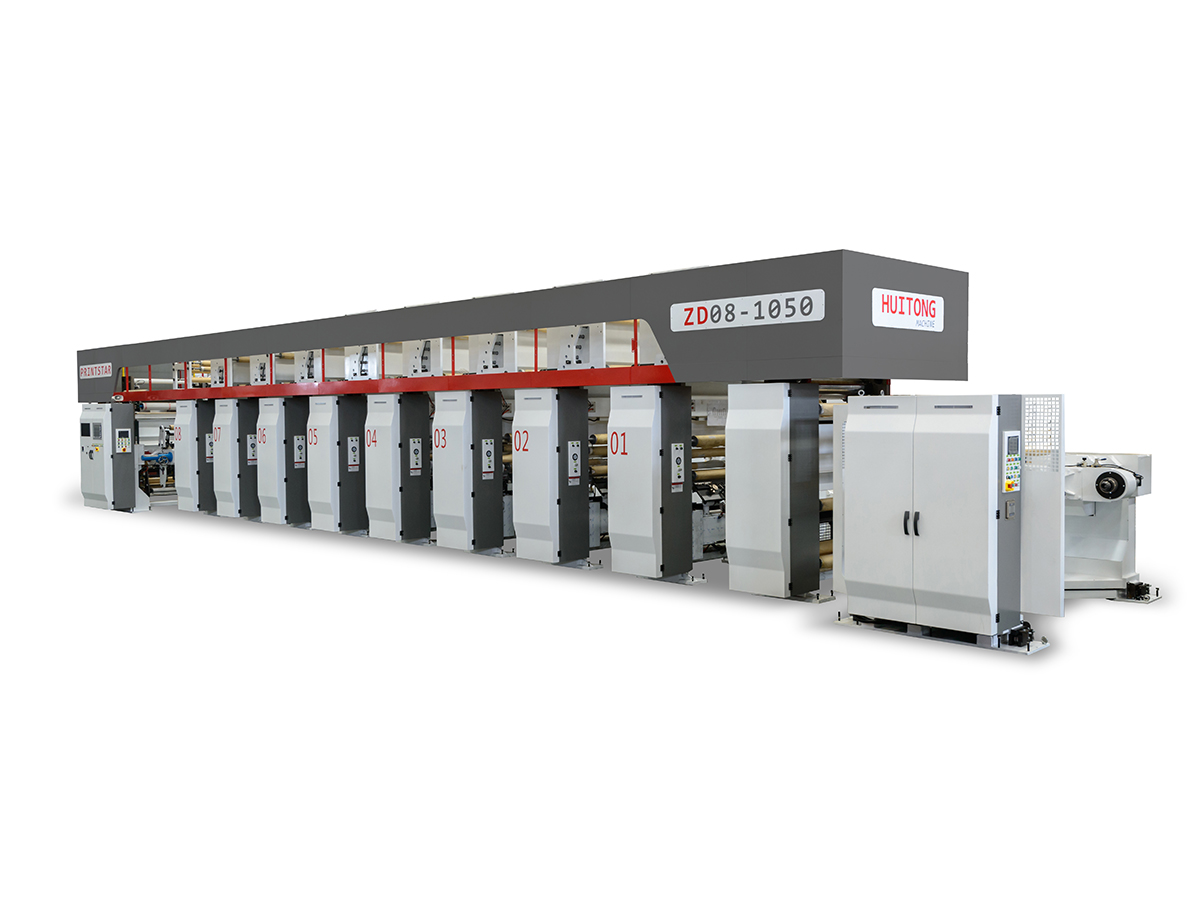
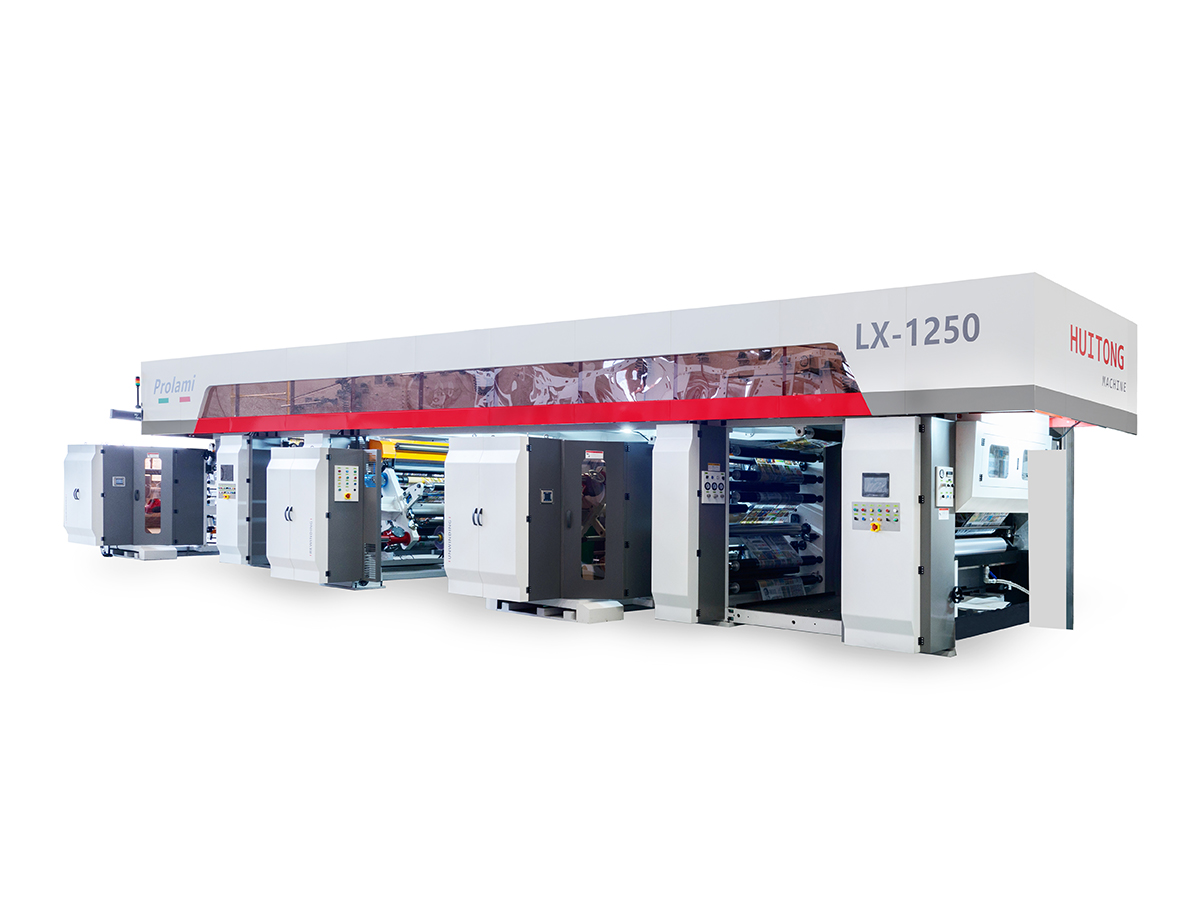
Rotogravure printing transfers ink from engraved cylinders onto the film surface. It suits long runs and fine detail, and it can reach line speeds of roughly 150 to 300 meters per minute on well-maintained machines. The key variables are cylinder condition, ink viscosity, drying temperature and registration between colors. Plants comparing a rotogravure printing machine should ask how the press handles film stretch and how quickly it changes colors during short runs. For a deeper look at press types, see our guide on choosing the right gravure press for your plant.
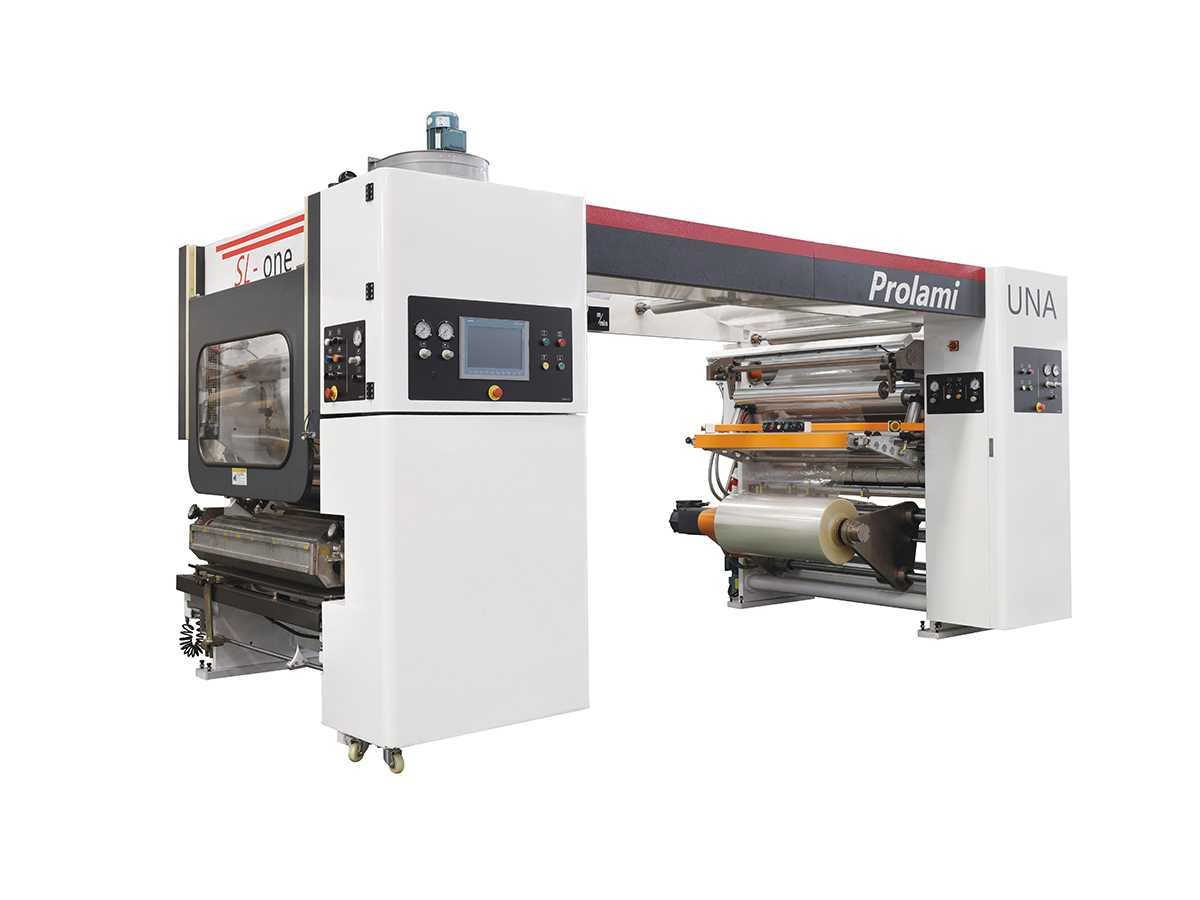
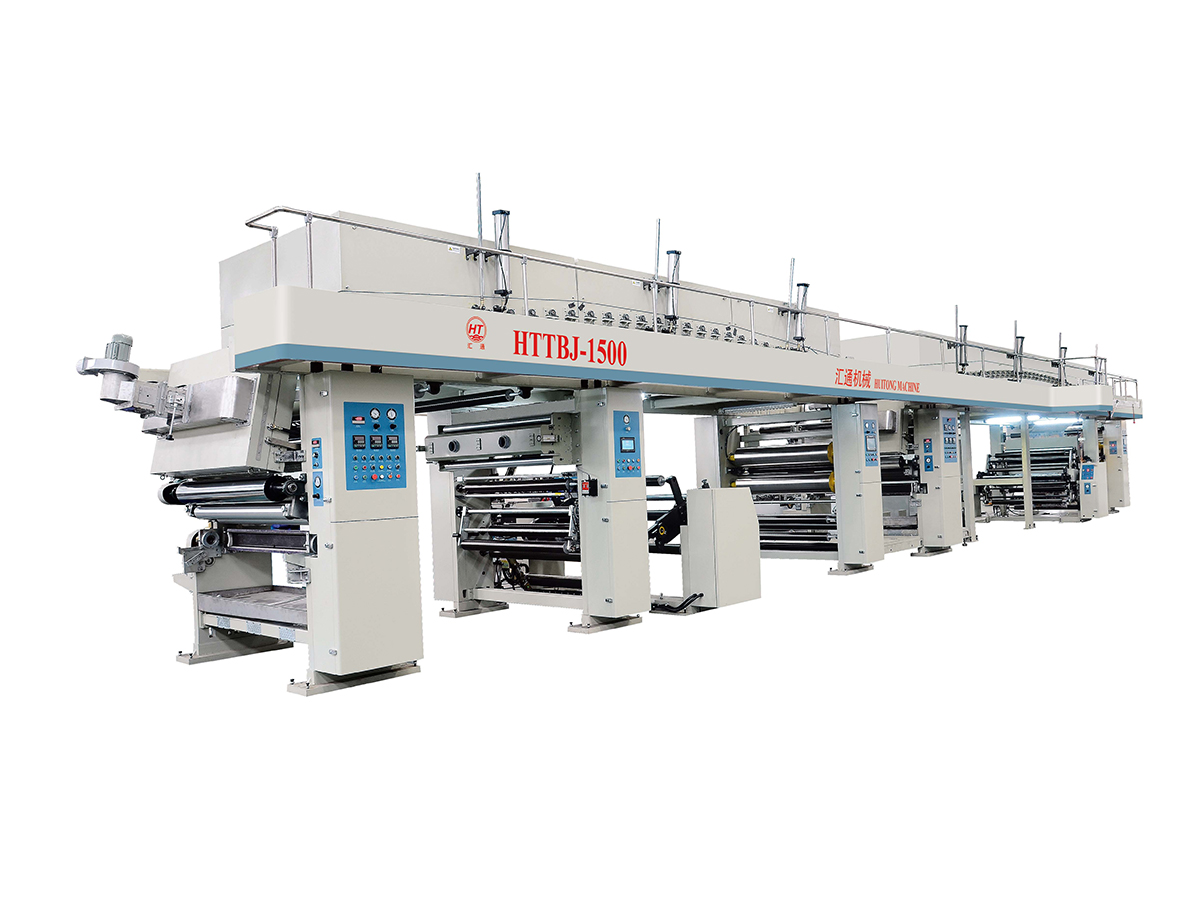
Lamination bonds printed films to other layers, usually PET, polyethylene or aluminum foil, to create the barrier and strength a pouch needs. Solvent-based dry lamination remains common, while solvent-free systems are gaining ground because they lower residual solvent levels and reduce energy use in drying. A dependable laminating machine should maintain adhesive weight within a tight range and hold consistent nip pressure across the full web width.
Coating adds a functional layer that blocks oxygen, moisture or aroma loss. Products such as dry foods, pharmaceuticals and certain dairy items often need this added protection. Coating weight, drying profile and surface treatment all determine barrier performance, so the coating station should be matched to the laminate structure that follows it.
Wide production rolls are cut into narrower reels that fit the bag making equipment. Slitting quality depends on blade condition, web tension and winding alignment. Loose edges, telescoping rolls and uneven tension cause wrinkles and seal errors later, so slitting is a quality control point, not just a cutting operation.
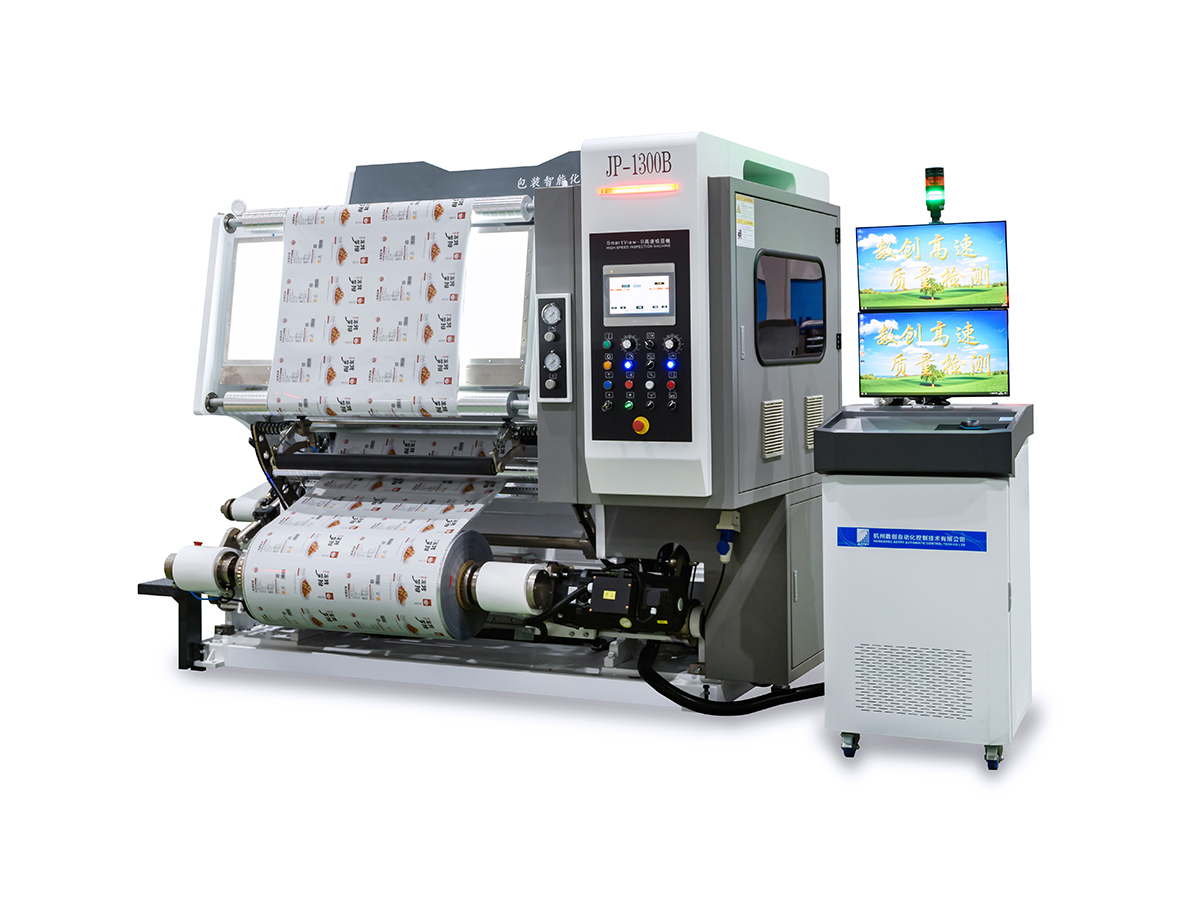
Inspection cameras scan the film for registration errors, color shifts, spots, scratches and pinholes. Early detection prevents defective material from reaching the bag making stage, where a fault can waste a finished roll. Many plants set inspection thresholds based on customer tolerance and use the recorded data to trace defects back to specific press or laminator settings.
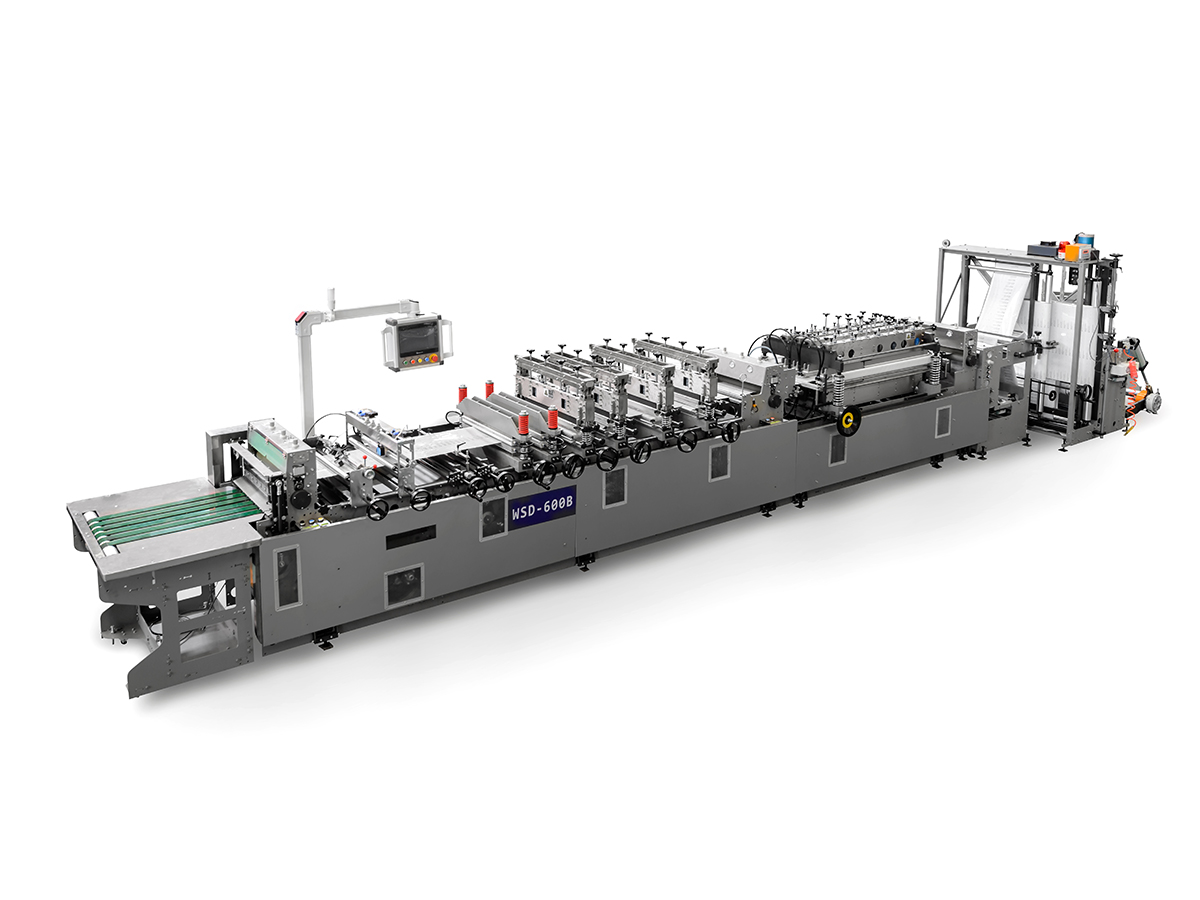
The bag making machine converts the finished reel into stand-up pouches, three-side seal bags, center-seal bags or gusseted formats. Heat sealing temperature, dwell time and pressure must match the sealant layer of the film. Seam strength and seal consistency are the final checks before the pouch is filled.
The stages are closely connected. A printing error may look minor on the press but becomes visible as a registration failure at the bag stage. For this reason, many buyers request a complete line from one planning team, with shared specifications for web width, tension zones and control systems.
Selecting machinery starts with the product and the market, not the catalog. Five factors shape most decisions, and they should be defined before any equipment is compared.
Speed is useful only when the line can hold quality at that speed. A slower line with stable tension often produces more saleable pouches per shift than a faster line that runs with frequent stoppages.
After-sales support also deserves attention, particularly for plants that import equipment. Buyers should check the availability of spare parts, remote troubleshooting, operator training and the supplier's response time for technical issues. A stable spare parts list and a documented maintenance schedule can save weeks of downtime over the life of the line.
Most problems on a flexible packaging line can be traced to a small set of causes. Understanding the links between symptoms and sources helps managers avoid repeated losses.
Misregistration appears when printed images drift relative to their intended position. The usual causes are uneven film stretch, unstable tension between print units and inconsistent cylinder mounting. Improving tension control and checking cylinder alignment at each start-up typically resolves the problem.
Bubbles and weak bonds usually result from contamination, incorrect adhesive weight or inadequate curing. Dust on the film, uneven nip pressure and insufficient drying time are frequent contributors. Regular checks of adhesive mixing ratios and roller cleanliness reduce these defects significantly.
Leaking seams are often caused by sealing temperatures that are too low, dwell times that are too short or contaminated sealing jaws. Contamination from product residue or film slip agents can also prevent a strong seal. Running seal strength tests at the start of each shift helps catch problems early.
Wrinkles spread across the whole line when tension zones are not balanced. A single poorly adjusted unwinder or a worn roller can disturb the web for several meters downstream. Consistent tension settings, documented for each material type, prevent this cascade of defects.
Different end markets place different demands on a line. The same six-stage sequence applies, but the emphasis on barrier performance, print quality and sealing changes with the product.
In each case, the line design reflects the film structure and the final pouch. Plants producing several product families often choose modular equipment that can switch between structures with limited downtime.
Budget planning should cover more than the purchase price. Installation, training, utilities, spare parts and the cost of wasted film during commissioning all affect the real cost of ownership. A line that costs less up front may cost more over five years if it produces higher scrap or needs frequent repairs.
| Cost driver | What to evaluate | Impact on budget |
|---|---|---|
| Machine specification | Speed, width and automation level | High |
| Installation and commissioning | Foundations, utilities and test runs | Medium |
| Consumables | Ink, adhesive, solvent and films | High |
| Maintenance and spare parts | Service contracts and part lead times | Medium |
| Operator training | Setup, changeover and troubleshooting skills | Low to medium |
A practical planning approach is to define the target product mix first, then build the line around the most demanding product. This avoids paying for capacity the plant will never use while ensuring that the most difficult structure can still run reliably.
A flexible packaging production line is a sequence of machines that converts plastic or foil films into finished pouches. It typically includes printing, laminating, coating, slitting, inspection and bag making equipment linked by a common web path and control system.
Most pouch production starts with a rotogravure printing machine, followed by a laminating machine and, when needed, a coating machine. The laminated film is then slit into reels, inspected for defects and converted into pouches by a bag making machine.
A dry laminating machine uses solvent-based adhesives that must be evaporated in a drying tunnel. A solvent-free laminator uses adhesives without solvent, which reduces residual solvent in the finished film and lowers the energy needed for drying.
Costs vary widely with machine width, speed, automation and the number of stages included. Buyers should compare total cost of ownership, including installation, training, consumables and spare parts, rather than relying only on the equipment price.
Yes. Machines can be adjusted for specific film structures, web widths, tension ranges and sealing profiles. Manufacturers usually request sample films and target pouch specifications during the planning stage to confirm the configuration before production.
Buyers should look for installation support, operator training, remote troubleshooting, a clear spare parts list and defined response times. Documentation in the buyer's language and a maintenance schedule are also important for long-term reliability.
A flexible packaging line is a connected system. Printing, laminating, coating, slitting, inspection and bag making each shape the quality of the next stage, so the best results come from planning the entire process together. Start with the film structure, output goals and pouch formats, then select machines that share compatible specifications and support.
Plants planning a new facility or upgrading an existing one can review the full range of flexible packaging machinery options and compare configurations that match their product mix. Whether the need is a single upgrade or a complete flexible packaging production line, a clear specification is the best starting point for an accurate proposal.
Contact Us
Recommended Products
Joining Hands With Huitong
Customize Your Flexible Packaging Equipment Solution
Inquire now
Products
contact us

Tel: +86-0510-86328508
+86-0510-86324508
Mob: +86-13914908980
Email: [email protected]
ADD: No. 429 Xizhang Road, Gushan Town, Jiangyin City, Jiangsu Province, China

 English
 русский
 Español
 عربى
عربى