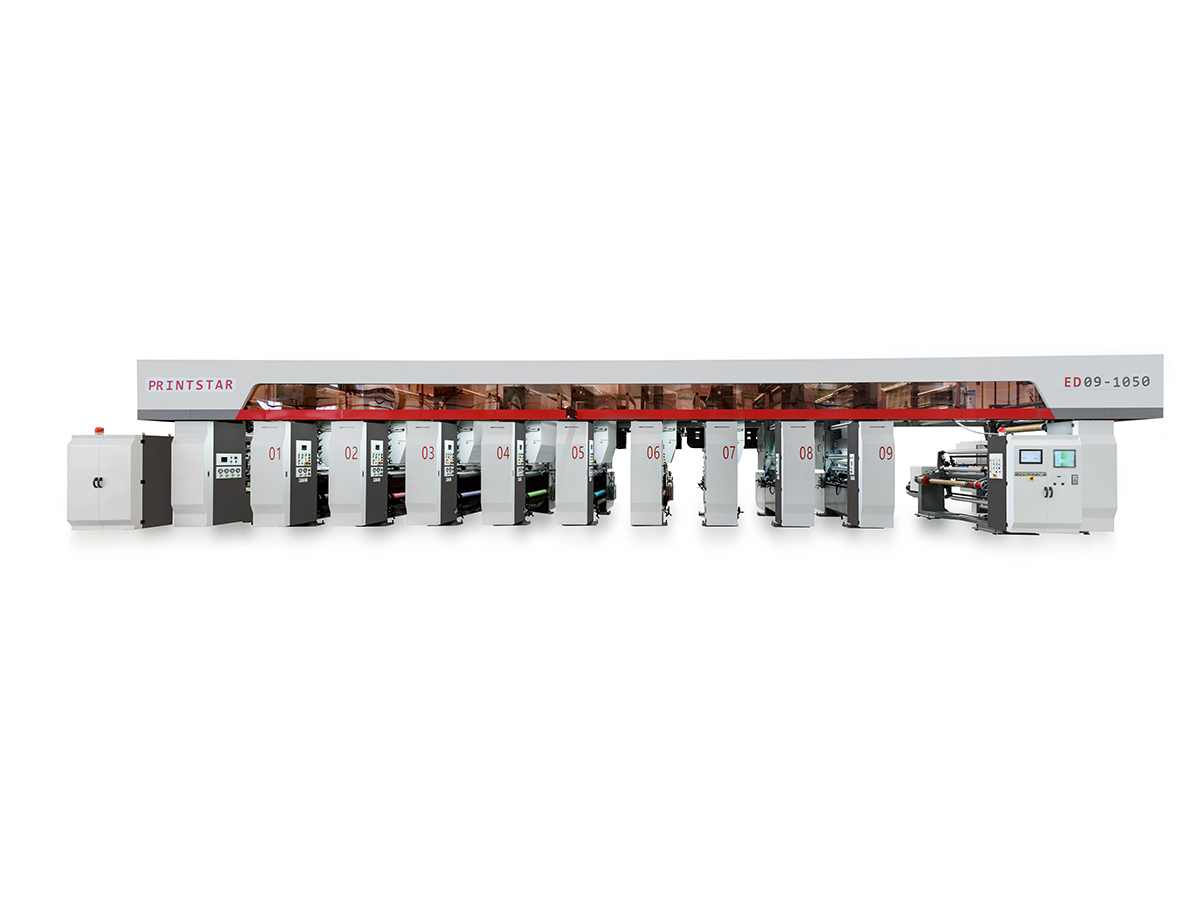
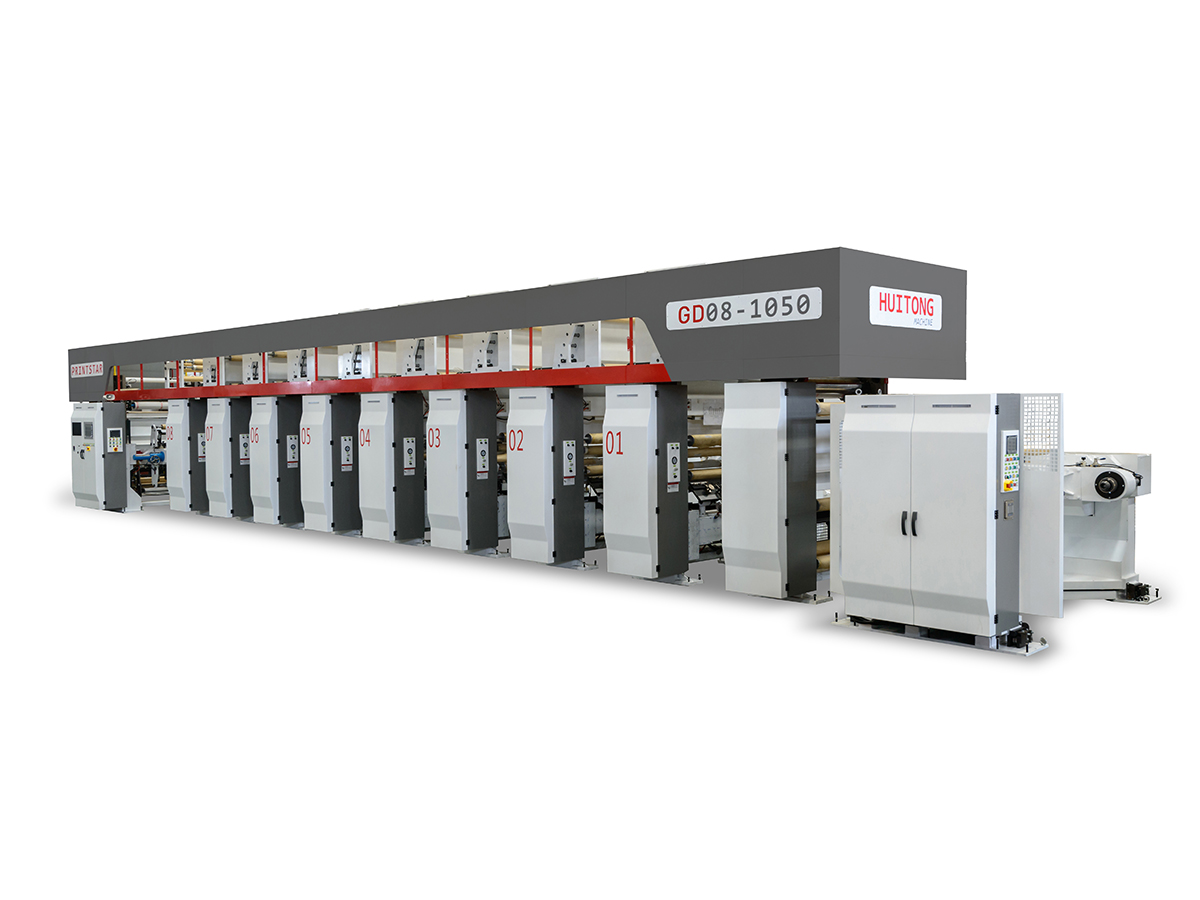
Every time a gravure press stops to replace a finished reel, the line loses more than the minutes spent on the change. The web has to be threaded again, tension has to be rebuilt, the first meters of film are usually scrapped, and the operator has to re-check color registration before the job can return to production speed. For a flexible packaging plant running several shifts a day, those interruptions add up to a noticeable share of lost capacity.
Auto-splicing, also called flying splice, removes most of that loss. The ED 260m economical rotogravure printing machine uses a turret unwind arrangement and a splicing unit so that a new reel is joined to the running web while the press keeps printing. This article explains how that sequence works step by step, which components make it reliable, what the practical benefits are for a medium-sized printing factory, and which materials and operating conditions suit the system. The goal is to give production managers and technical buyers enough detail to judge whether this approach fits their workflow.
Auto-splicing is a method of changing a material reel while the press remains at running speed. Two reels are mounted on a turret. One feeds the printing units while the other waits in standby, already loaded and ready. When the active reel approaches its end, the control system prepares the standby reel, accelerates it to match the web speed, and joins the two webs with adhesive tape before cutting the tail of the old reel free.
The difference from manual roll change is easiest to see side by side.
| Factor | Manual roll change | Auto-splicing on ED 260m |
|---|---|---|
| Press status during change | Stopped or slowed | Running at full speed |
| Typical waste per change | Long run-up and test waste | Short splice waste |
| Operator involvement | High, hands-on threading | Low, mostly supervision |
| Registration recovery | Needs re-adjustment | Maintained by tension control |
For an economical configuration, the value lies in getting most of the benefit of this sequence without the cost of a top-tier machine. The splicing function is built into the unwind design rather than added as an afterthought, which keeps the mechanical layout simple and the maintenance routine manageable.
The splicing cycle on this machine follows six stages. Each stage hands control to the next only after the previous condition is confirmed, so the sequence is repeatable even when reel diameters, substrates and line speeds vary across jobs.
Because the press never decelerates, the transition consumes very little material. In practice, a well-calibrated splice produces only a short section of unusable film, which is far less than the waste from a stop-and-restart change on a conventional unwind.
The splicing function depends on several subsystems working together. Understanding each one helps operators diagnose problems quickly and helps buyers compare configurations.
Carries two shafts so that the standby reel can be prepared without interrupting production.
Measures the remaining reel diameter without contact, providing the timing signal for the splice.
Coordinates the sequence, stores recipes for common reel sizes, and displays status for the operator.
Adjusts drive torque in real time so the web keeps consistent tension through the splice.
Presses the new web onto the old one and trims the tail cleanly to limit wrinkles at the joint.
Keeps the edges aligned so the spliced film enters the printing units square and centered.
For plant managers, the value of auto-splicing shows up in output, scrap rate and labor allocation. The following points reflect the typical gains reported by converters who move from manual roll changes to a flying splice system.
A plant that runs three or four reel changes per shift on a manual press can recover a meaningful amount of machine time each day by moving to a flying splice. The exact figure depends on reel length, job mix and operator skill, so the best approach is to measure current changeover time and waste per job before estimating the gain.
Auto-splicing works best with films that bond reliably to adhesive tape and maintain tension well at speed. The table below summarizes typical substrates used on economical rotogravure lines.
| Substrate | Splice suitability | Typical application |
|---|---|---|
| BOPP film | Excellent | Snack and confectionery wrap |
| PET film | Very good | Lamination base and pouches |
| PE film | Good | Bags and liners |
| PVC film | Good with tuned tension | Shrink and rigid packaging |
| Aluminum foil composite | Good with careful setup | Barrier packaging |
Very thick or highly rigid materials are less forgiving at the splice point because the adhesive joint must absorb more stress. In those cases, reduced line speed during the splice or a customized tape selection may be needed, and buyers should confirm these details during the technical review stage.
Most splicing problems can be traced to a small set of causes. Recognizing the symptom and checking the right parameter usually resolves the issue within minutes.
No. The standby reel is accelerated to match the running web speed before the joint is made, so the press keeps printing throughout the transition.
The waste is limited to a short section around the joint and the trimmed tail. The exact length depends on tape width, reel tension and operator setup, but it is generally much shorter than the waste from a manual restart.
Thin films can be spliced, but they require accurate tension control and well-maintained rollers. Trial runs are recommended before committing to a production job with very light gauge material.
The most common causes are incorrect speed synchronization, worn cutting blades, contaminated tape surfaces and misaligned web guides. Regular inspection prevents most failures.
It is most valuable on long runs and high-volume reels. For very short jobs with frequent changes of substrate, the time saved per change may be smaller, so the decision should be based on the typical job mix.
Request a description of the sensor type, tension control method, splice recipe options and typical waste per joint. A live running demonstration with the buyer's own substrate gives the most reliable picture.
Auto-splicing on the ED 260m economical rotogravure printing machine brings a proven non-stop roll change method to converters who need steady output without the cost structure of a premium press. The sequence of standby loading, diameter monitoring, speed matching, splicing, tension control and turret indexing keeps the web running while the reel changes.
If you are planning a new line or upgrading an existing unwind, review the full specification and compare the splicing configuration against your substrate mix and reel sizes. For a detailed technical discussion or a quotation, you can contact our team about the ED 260m economical rotogravure printing machine and request a sample running report.
Contact Us
Recommended Products
Joining Hands With Huitong
Customize Your Flexible Packaging Equipment Solution
Inquire now
Products
contact us

Tel: +86-0510-86328508
+86-0510-86324508
Mob: +86-13914908980
Email: [email protected]
ADD: No. 429 Xizhang Road, Gushan Town, Jiangyin City, Jiangsu Province, China

 English
 русский
 Español
 عربى