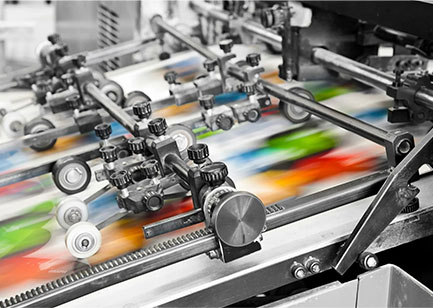
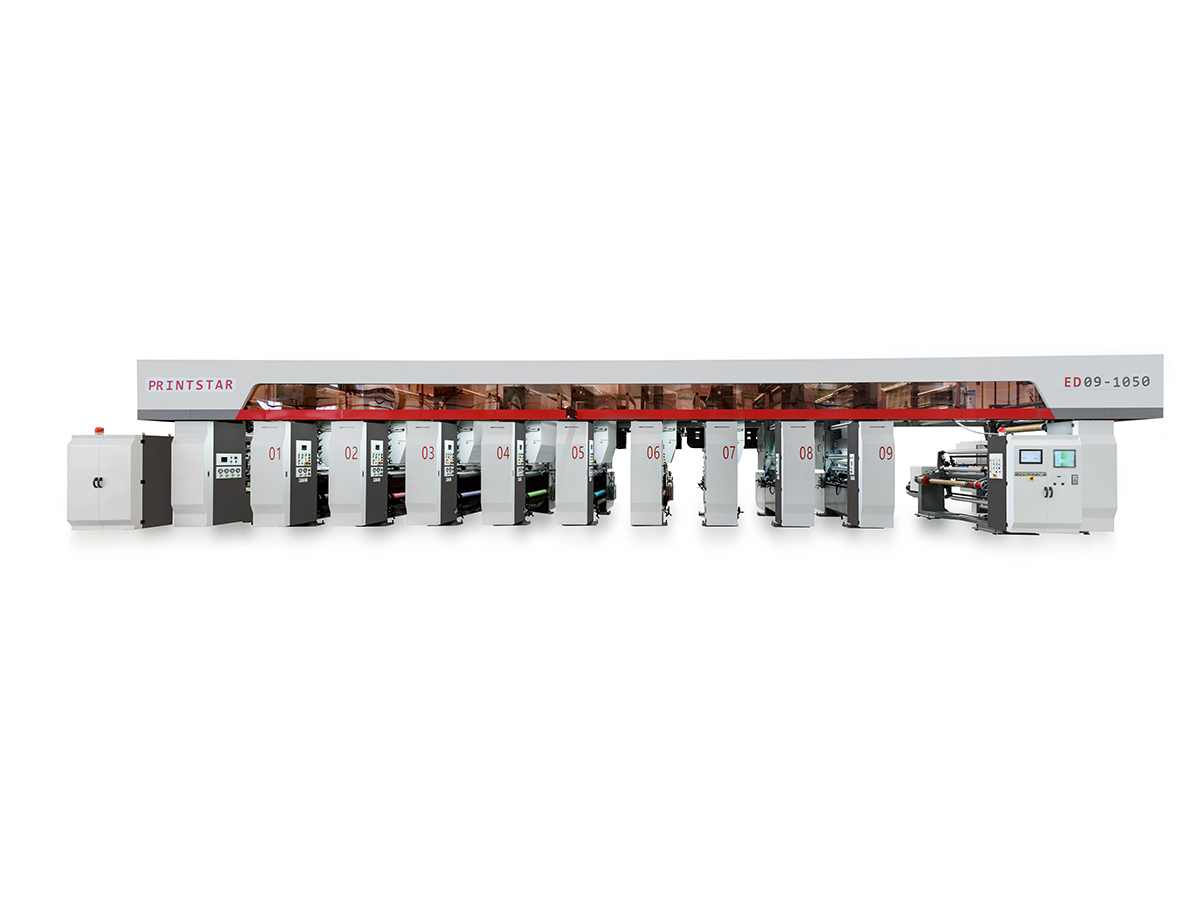
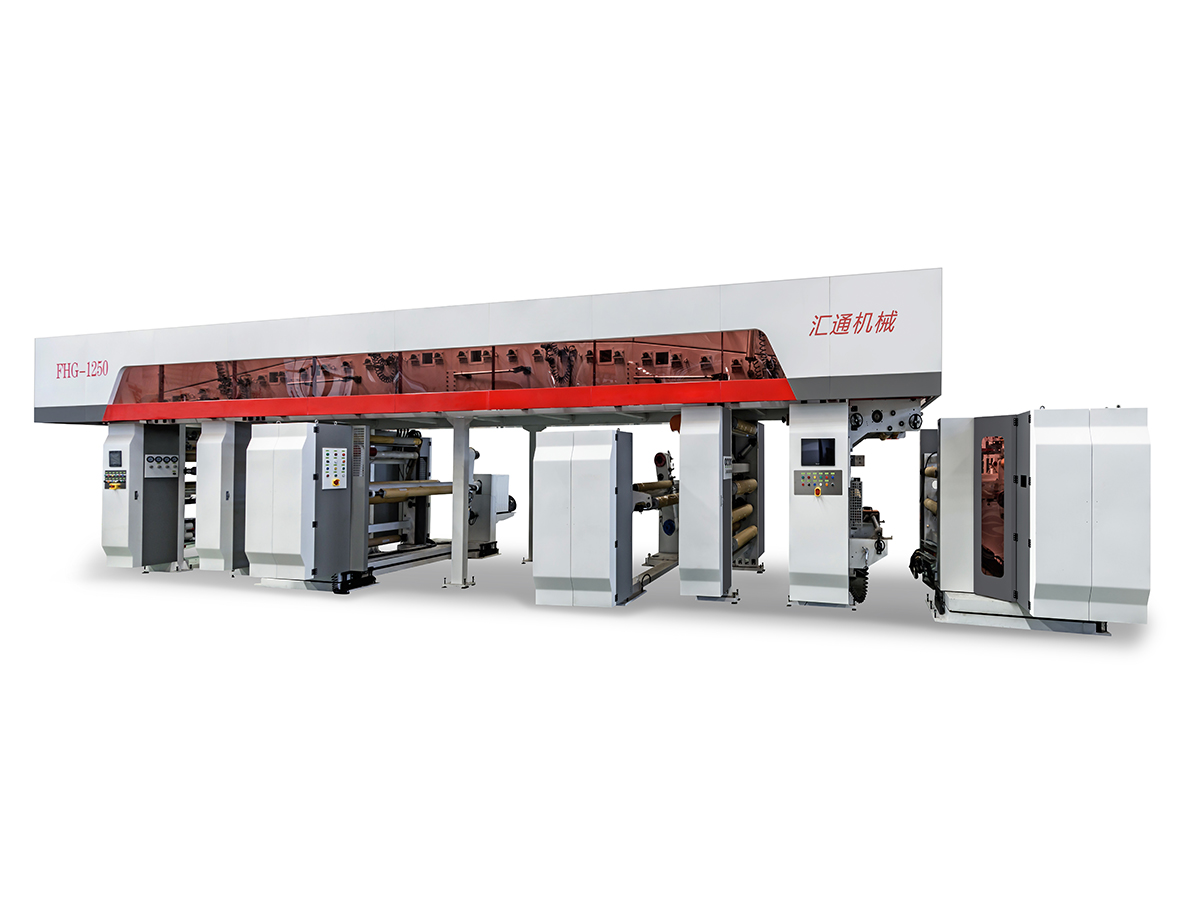
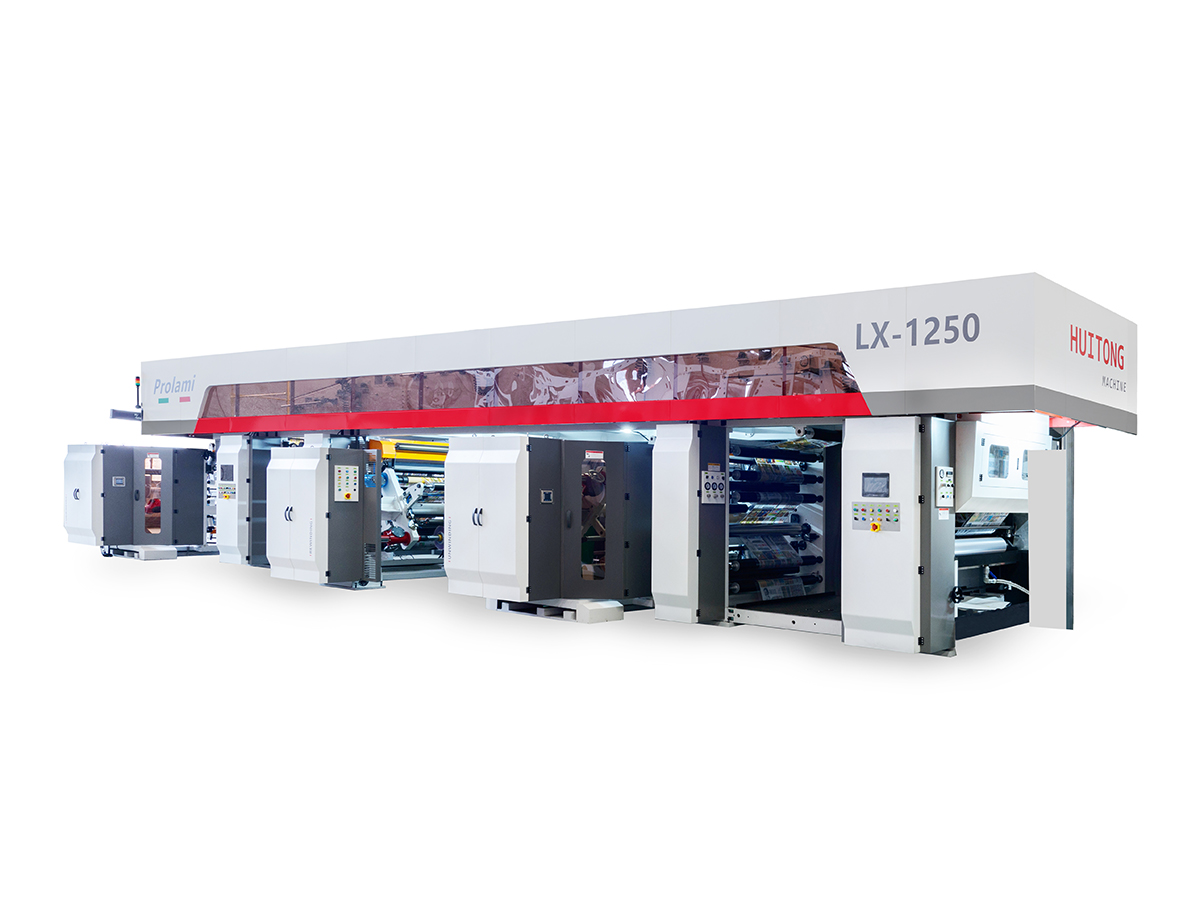
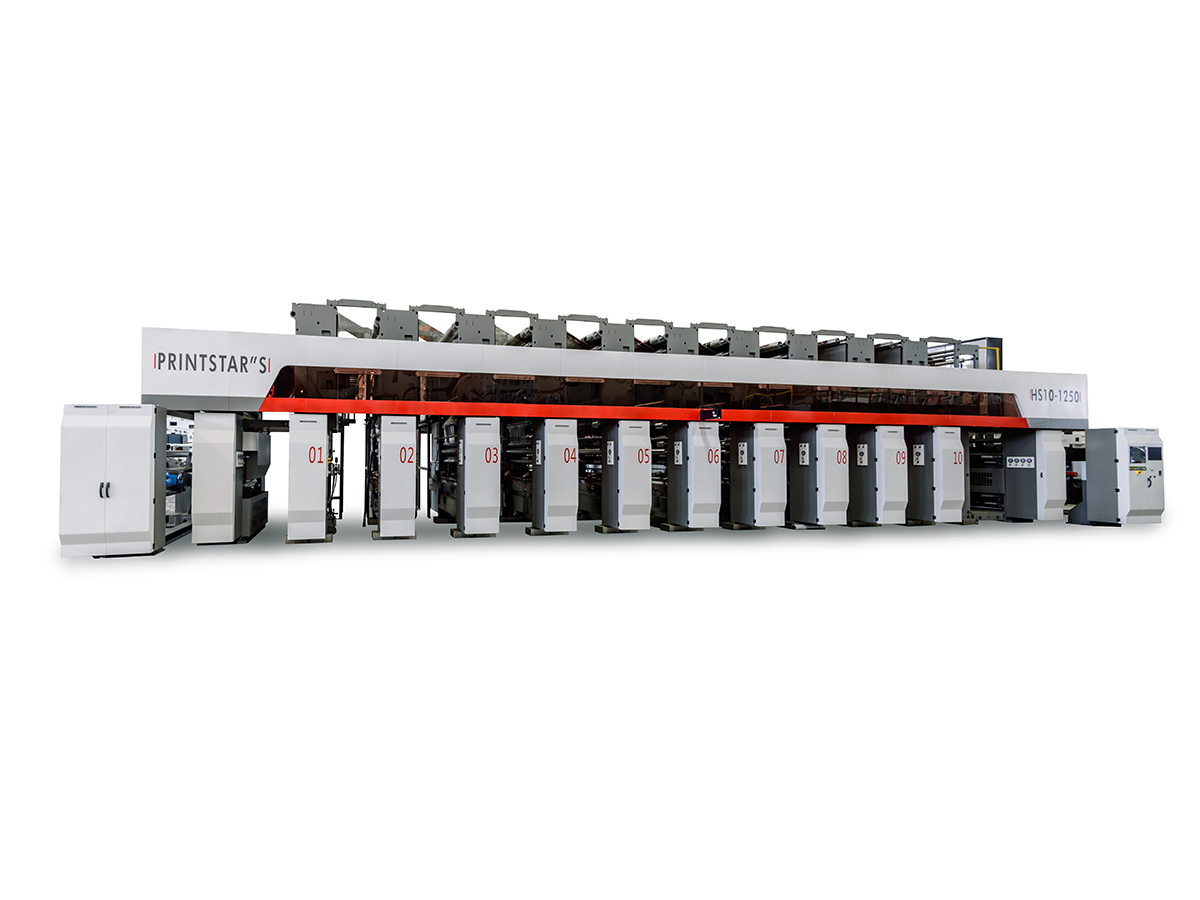
At 350 meters per minute, a film web spends only fractions of a second between each color station. In that window, any small disturbance in tension, drive timing, or mechanical rigidity can turn into a visible misalignment on the printed image. Operators who have run high-speed gravure lines know the pattern well: registration looks perfect at a steady speed, then drifts as the press accelerates, changes substrate, or reaches full load.
The problem is rarely a single fault. It is an accumulation of small errors that compound across eight or more color units. Understanding where those errors originate is the first step toward controlling them.
Conventional variable-speed drives rely on frequent acceleration and deceleration to match line speed. Each change introduces inertial forces that shift the phase of the plate cylinder relative to the web. At high speed, even a tiny gear backlash is magnified, showing up as longitudinal registration wobble.
As unwind and rewind diameters change during a run, web tension fluctuates. At lower speeds, a compensating roller can absorb these changes. At 350 m/min, the correction has to happen faster than most mechanical compensators can respond, so residual tension variation passes straight through to the print.
Registration stability at high speed depends less on peak motor power and more on how consistently the drive delivers force across every color station.
The ZD 350m rotogravure printing machine approaches the problem from the drive side. Rather than pushing the motor through repeated speed changes, its uniform speed drive architecture keeps the power path in a steadier operating state. High-precision gear and coupling combinations transmit torque with less backlash, so the phase relationship between stations stays closer to its set value.
When power output is held more constant, the press spends less time correcting itself. This matters most during startup and during speed ramps, where most registration losses are generated in conventional lines. Fewer corrections mean fewer opportunities for error to enter the print.
Stiffness matters as much as drive smoothness. Low-friction bearings paired with a high-rigidity support frame limit how much the rotating system deforms under load. This keeps each plate cylinder at its preset phase even when running large-diameter cylinders at full load, where bending and thermal growth would otherwise shift the image.
| Factor | Conventional Approach | Uniform Speed Approach |
|---|---|---|
| Speed changes | Frequent accel and decel | Steadier power delivery |
| Gear backlash effect | Amplified at high speed | Reduced by precision transmission |
| Frame deformation | Noticeable under full load | Limited by rigid support |
Mechanical stability sets the baseline, but active correction handles what physics cannot fully eliminate. Each color station in the ZD 350m configuration is driven by its own servo motor, which removes the need to shift the whole line to fix one station's error.
When each unit has its own servo, phase adjustments can be made locally. A small error on one color group is corrected at that group rather than being passed down to the next, which prevents the error from accumulating across the press. The response of an electronic servo axis is far faster than a mechanical correction path, which is why independent drives are central to modern high-speed registration.
Photoelectric sensors read registration marks on the web continuously. The control system compares each reading against the target position and sends a correction to the servo within milliseconds. The result is a loop that keeps running adjustments small and frequent rather than large and infrequent, which is what high-speed printing needs.
Closed-loop registration correction cycle on a single color station
Technical stability only matters if it translates into fewer wasted meters and less downtime. For converters, the most visible benefit appears during the speed ramp from threading to full production, where unstable registration typically generates the highest scrap volume.
When registration holds through acceleration, operators spend less time making plate adjustments and fewer meters are discarded before the job reaches saleable quality. Across a long production week, that difference adds up to meaningful material savings.
Thin substrates such as oriented polypropylene and polyester are sensitive to tension changes, since they stretch more easily than heavier materials. Reducing tension disturbance at the source means less film elongation during printing, which in turn keeps the image aligned across the web.
Stable color registration at high speed comes from two complementary layers. The first is physical: a uniform speed drive, precision transmission, and rigid rotating components that reduce the disturbances entering the print. The second is algorithmic: independent servo correction and mark-based feedback that catch and fix what remains. Together they allow the ZD 350m rotogravure printing machine to hold register through the demands of full-load, high-speed production.
If you are running eight-color jobs on thin films and need consistent registration above 300 m/min, you can request a detailed technical breakdown of the ZD 350m rotogravure printing machine drive configuration and a quote tailored to your substrate width.
Most errors come from accelerating and decelerating the drive, gear backlash that grows with speed, and tension changes as roll diameters shift during the run.
Thin films stretch more under tension, so even small fluctuations can shift the image position across the web and cause visible misregistration.
Well-tuned closed-loop systems read marks and issue corrections within milliseconds, keeping adjustments small and frequent rather than large and delayed.
Yes. When registration holds through the speed ramp, operators make fewer plate adjustments and discard fewer meters before reaching saleable output.
Contact Us
Recommended Products
Joining Hands With Huitong
Customize Your Flexible Packaging Equipment Solution
Inquire now
Products
contact us

Tel: +86-0510-86328508
+86-0510-86324508
Mob: +86-13914908980
Email: [email protected]
ADD: No. 429 Xizhang Road, Gushan Town, Jiangyin City, Jiangsu Province, China

 English
 русский
 Español
 عربى