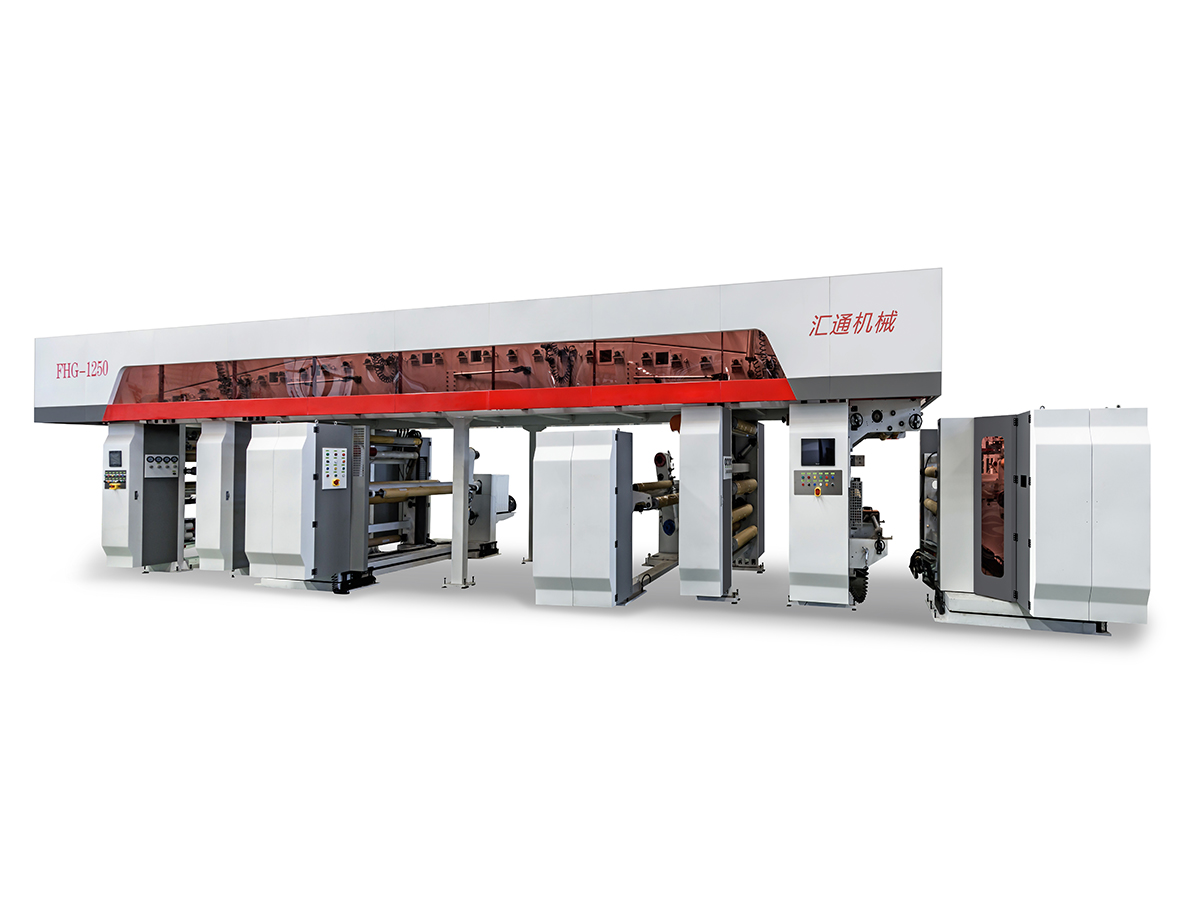
Most disappointing flexible packaging projects do not fail because the equipment is poor. They fail because the machines were chosen before anyone defined the films, pouch formats and quality targets the plant would run every day. A line that looks impressive in a brochure can still generate heavy scrap when it meets a thin metallized film or a biodegradable substrate that behaves differently under tension.
Procurement teams often compare machines by headline speed and purchase price. Experienced plant managers look at a different set of numbers: how much usable film leaves the line per shift, how long a color change takes, and how many operators are needed to keep the process stable. The ranges below are commonly seen when buyers review proposals from several suppliers.
millimeters, typical web width range
meters per minute, typical running speed
hours, typical color change time
A line rated for high speed is only valuable if it can hold registration, tension and coating weight at that speed on the film you actually run.
Before reading the rest of this guide, it helps to define what you are buying. A flexible packaging machine is not one piece of equipment but a set of processing units that prepare, decorate, bond and convert thin flexible webs into finished pouches or rolls. Understanding how these units connect is the first step toward a sound purchase decision.
A complete line moves a web of film through a sequence of stations. Each station changes one property of the material, and every handover between stations is a point where waste can be created. The diagram below shows a common integrated layout for printed and laminated pouches.
Tension control runs through every station. Unwinding and rewinding sections hold the web under controlled pull, while dancer rollers and load cells keep tension inside a narrow band. Many quality problems that appear later, such as wrinkles, misregistration and edge curl, begin with tension drift at the start of the process.
Lines can be built as standalone units or as integrated systems. Standalone units give a plant the flexibility to buy in stages, but every transfer between machines adds handling time, operator involvement and a chance for film damage. Integrated lines cost more upfront and need more careful floor planning, yet they usually deliver more consistent output once they are tuned properly.
The typical role of each main station can be summarized as follows.
Each machine type solves a different production problem. The subsections below explain the main categories and the checks that matter most when comparing supplier offers.
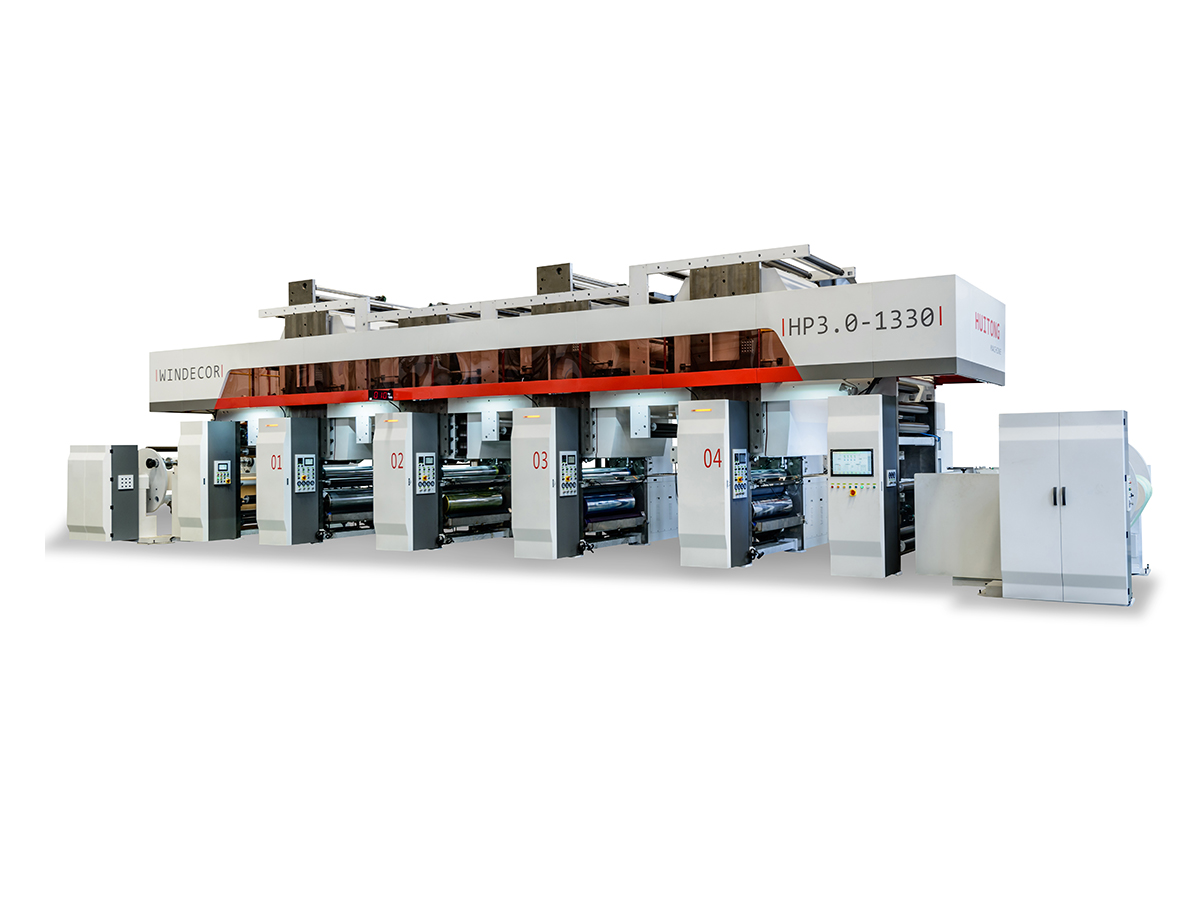
A rotogravure printing machine transfers ink from engraved cells on a cylinder onto the film surface. The depth and volume of each cell control how much ink is deposited, which allows fine tonal gradation and dense solid colors. For long runs of packaging with photographic images, this method remains a standard choice because the cylinders can be reused across many jobs with the same repeat length.
The main advantages are stable color reproduction across large volumes, good performance on a wide range of substrates, and high line speeds once cylinders are engraved and the ink system is balanced. The trade-off is the cost of cylinder preparation, which makes very short runs less economical unless the design is reused over time.
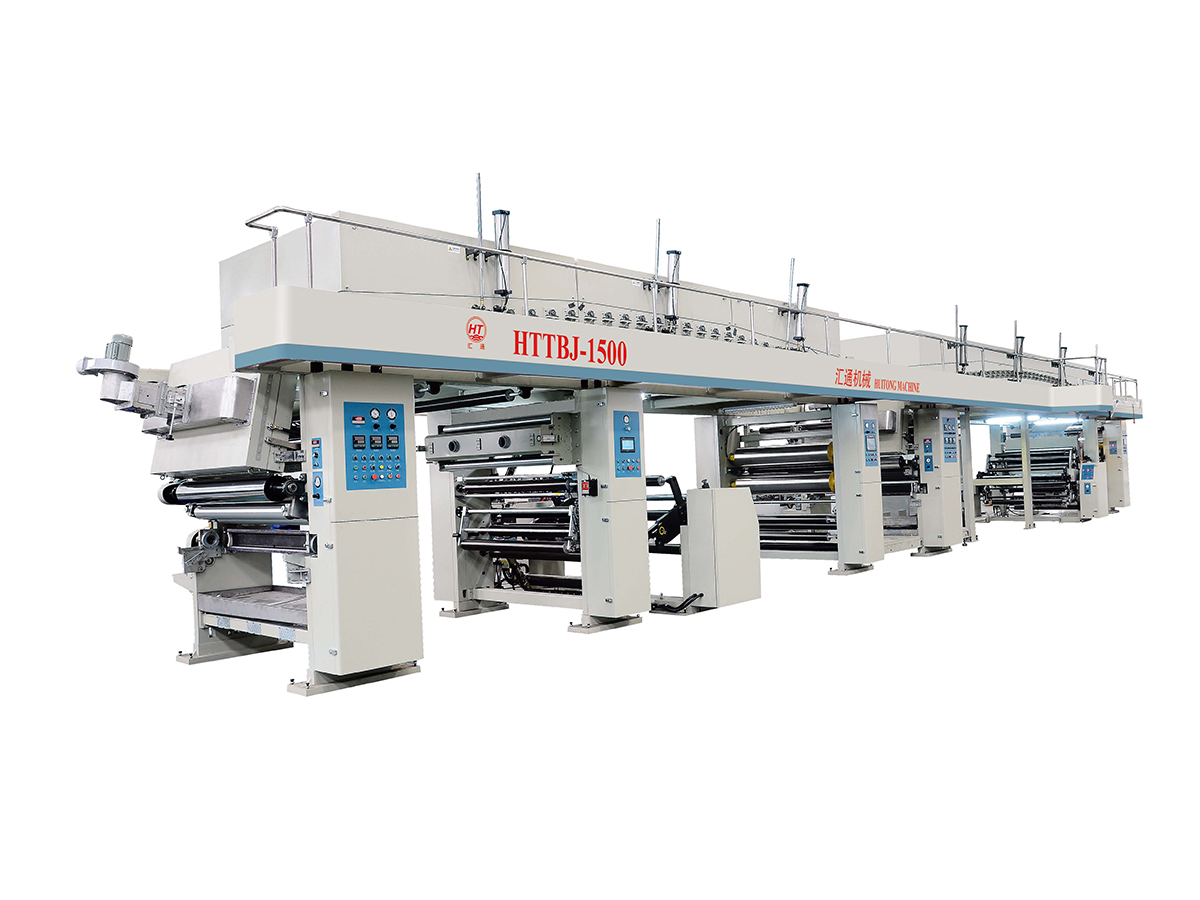
A coating machine applies a thin functional layer to the film surface. Typical coatings include heat-seal layers, anti-scratch layers, anti-static layers and barrier coatings that improve resistance to oxygen or moisture. Coating heads such as gravure, reverse roll and slot die systems each deliver a different level of precision and suit a different viscosity range.
Coating weight is the variable that deserves the most attention. Too little coating reduces barrier or seal strength, while too much increases material cost, slows drying and can cause blocking when rolls are stored. Ask suppliers how their system measures and controls coating weight during production, not only during startup trials.
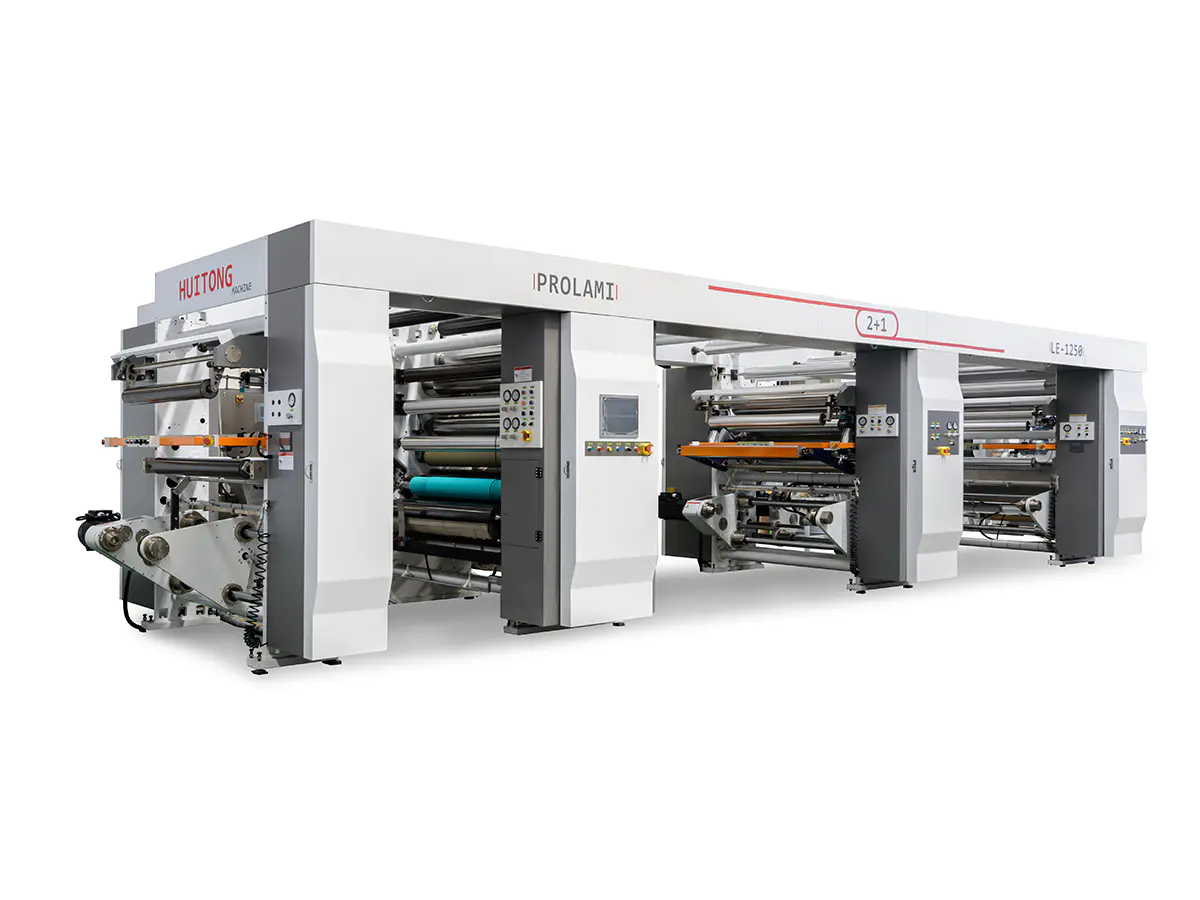
A lamination machine bonds two or more films together with an adhesive layer. Traditional dry lamination uses solvent-based adhesives that evaporate in a drying tunnel before the laminate is rewound. Solventless lamination applies a two-component adhesive with no solvent carrier, which reduces emissions and eliminates the residual solvent that can cause odor problems in sensitive food packaging.
For food and infant nutrition packaging, solventless systems are increasingly preferred because they lower residual solvent risk and reduce the energy needed for drying. Dry systems still perform well for many non-food products and benefit from a mature adhesive supply chain. The better choice depends on the product, the regulatory requirements in your market and the adhesive options available to your plant.
Once printing and lamination are complete, the master roll is slit into the widths required by downstream bag forming. Slitting quality affects edge straightness, and edge defects can propagate into pouch seals later. Rewinding then builds stable rolls with consistent tension, which matters greatly for pouch machines running at high speed.
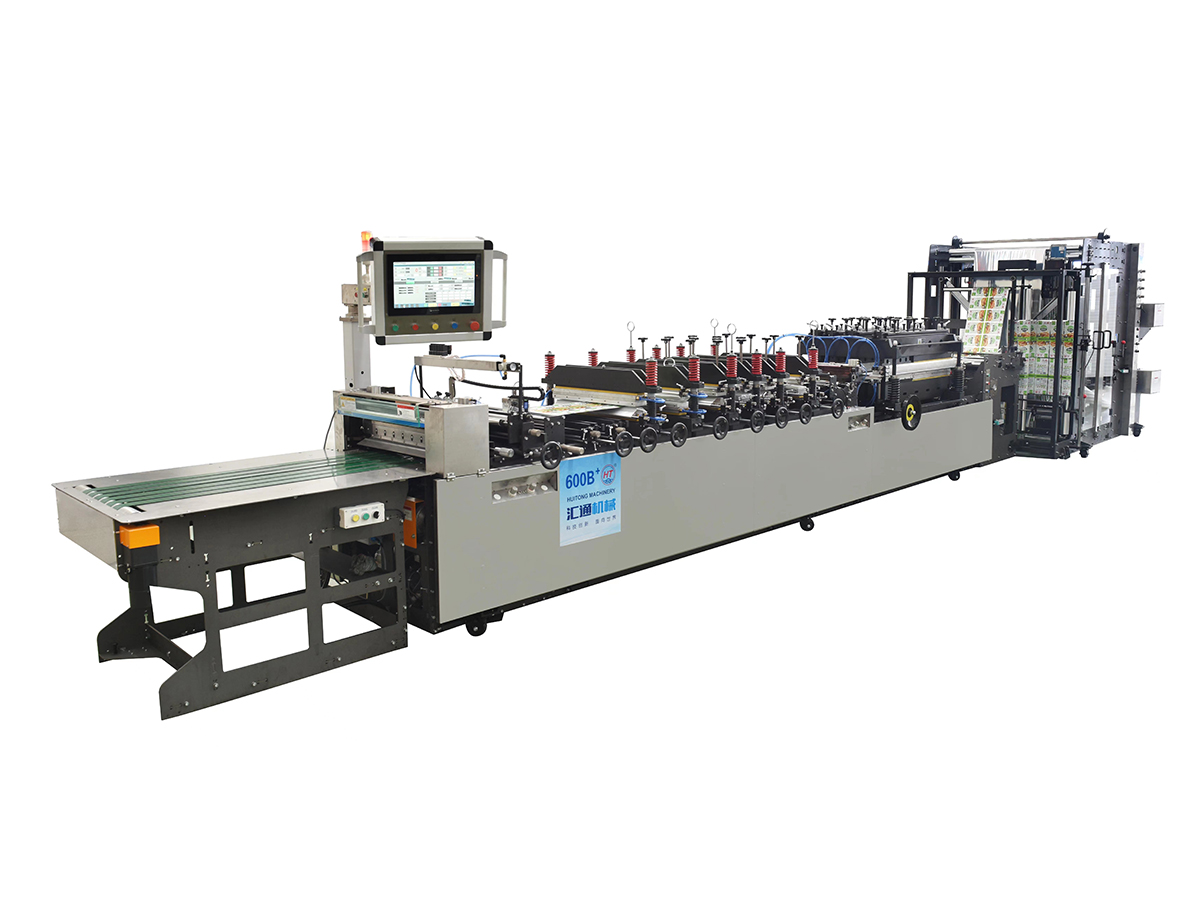
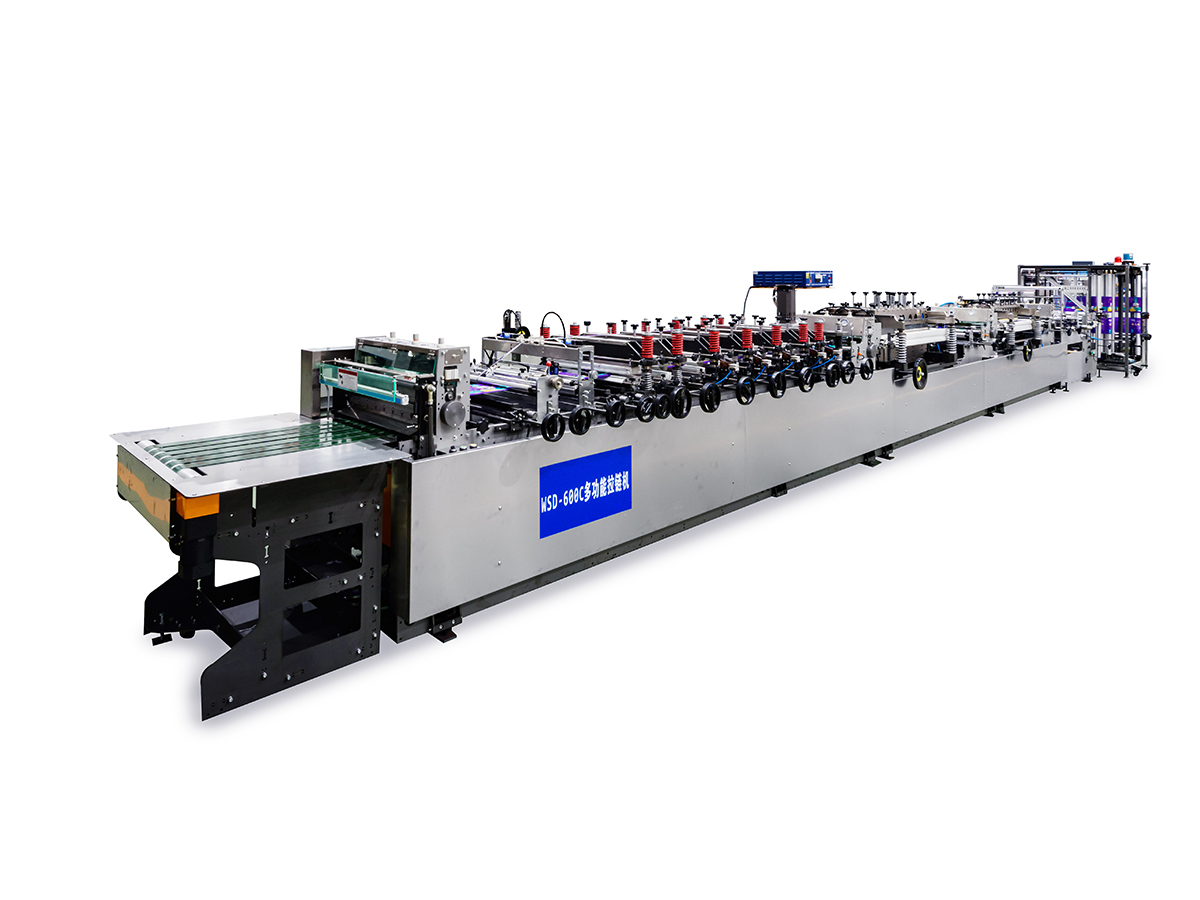
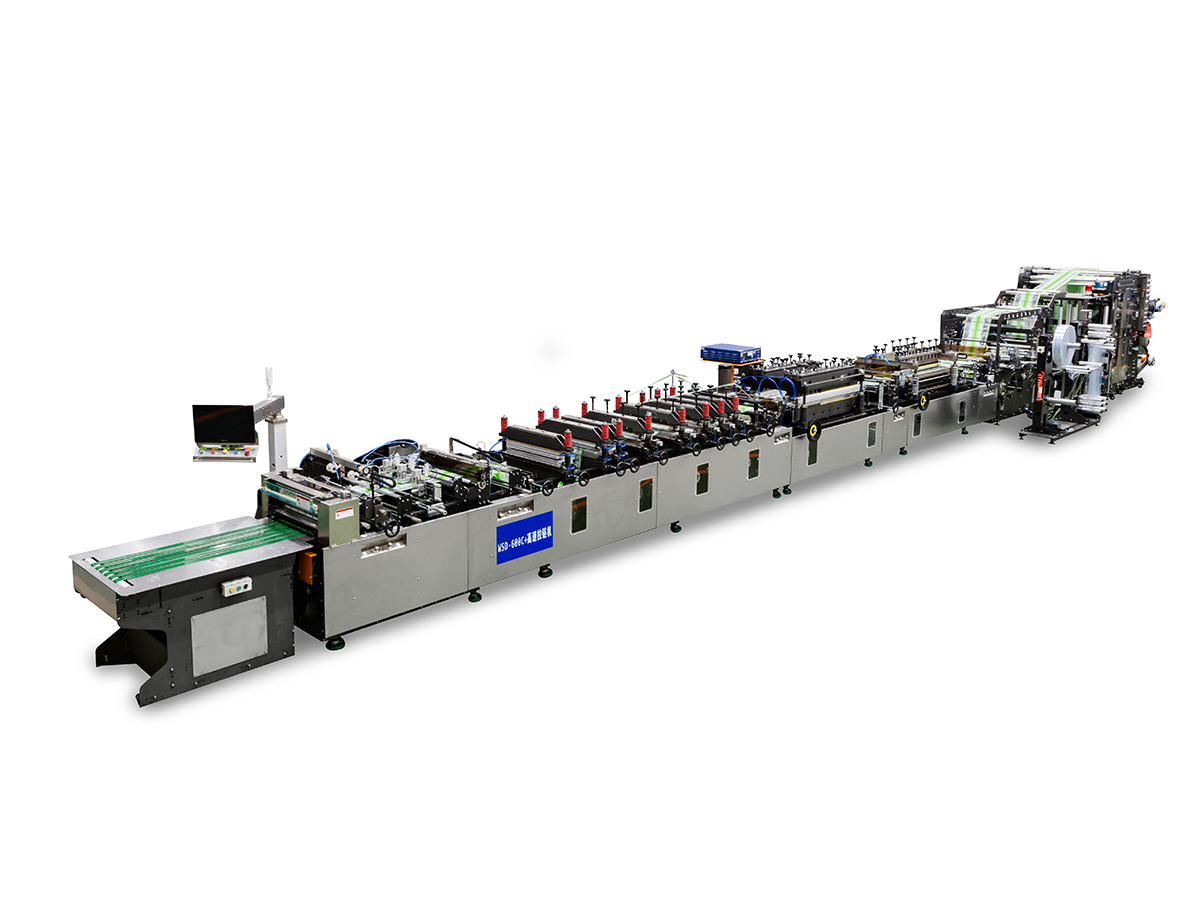
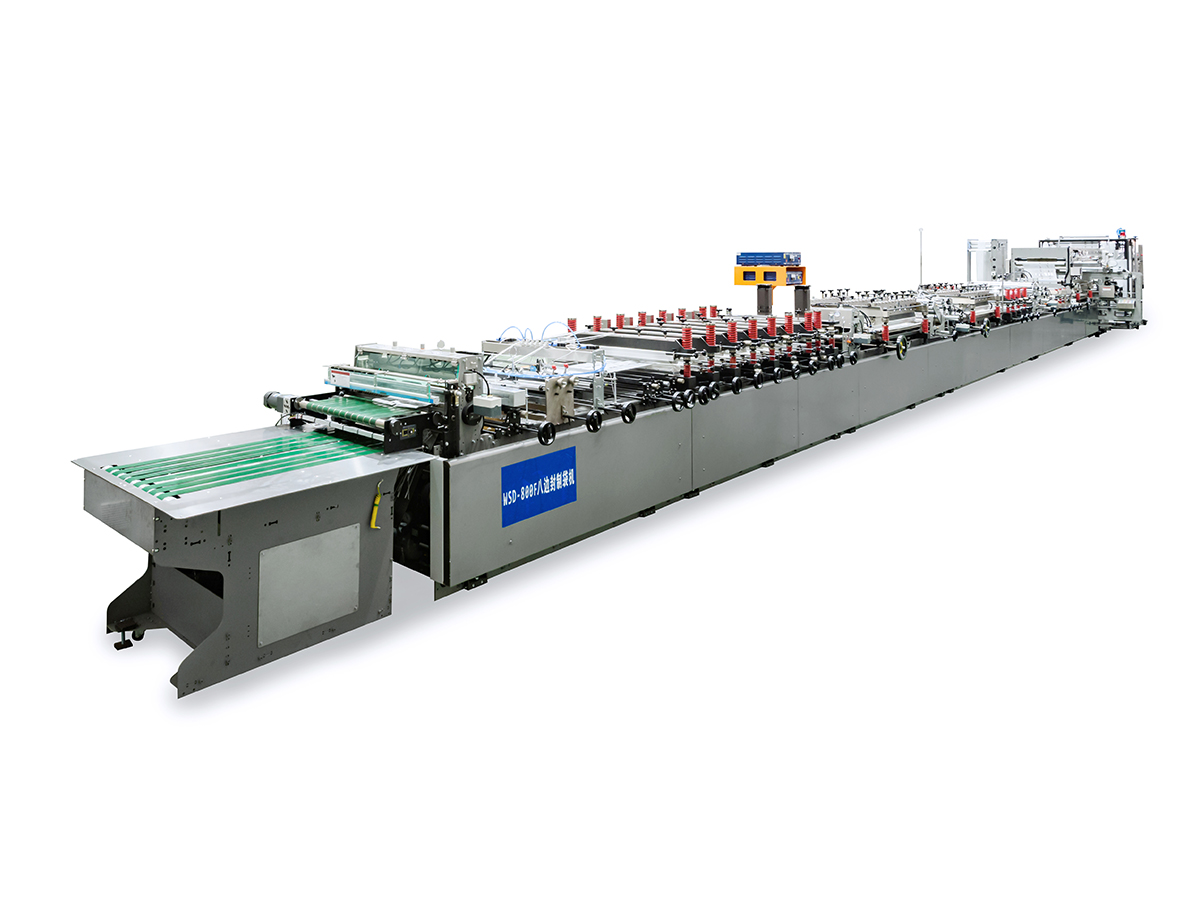
Pouch making machines form three-side seal bags, stand-up pouches, zipper pouches and sachets. Plants that sell only roll film can skip this stage entirely. Plants producing finished pouches should match the sealing and cutting capacity of the pouch machine to the slitting output so that neither unit becomes a bottleneck.
| Machine | Main function | What to verify |
|---|---|---|
| Rotogravure printing | Applies decorative and informational graphics | Color stations, cylinder sizes, drying capacity |
| Coating | Adds functional surface layers | Coating weight control, head type, viscosity range |
| Lamination | Bonds films for barrier and strength | Adhesive system, nip pressure control, curing time |
| Slitting and rewinding | Produces finished roll widths | Edge quality, tension control, splice handling |
| Pouch making | Forms and seals finished bags | Seal type, cutting accuracy, speed by bag size |
Selection becomes easier when criteria are ranked by their effect on real production. The list below moves from the most decisive factors to supporting ones, and it works well as a scoring framework when several suppliers are involved.
A practical scoring method is to assign each criterion a weight that reflects your priorities, then rate every supplier from one to five based on your own sample test results. Suppliers who will not run your film on their equipment before purchase should receive a lower confidence rating, because the risk of late surprises falls on your plant.
The film often determines more of the process settings than most buyers expect. Machine capability should be verified on the exact substrate, including thickness, surface treatment and any printed or coated layers already applied before the machine sees the web.
| Film type | Handling challenge | Equipment consideration |
|---|---|---|
| BOPP | Good dimensional stability, but ink adhesion depends on surface treatment | Corona or flame treatment and ink adhesion testing |
| PET | High stiffness and strong heat resistance | Higher drying temperature range and firm tension control |
| CPP | Low melting point and tendency to wrinkle under heat | Gentle drying profile and well-designed chill rollers |
| PE | Soft and stretchy, sensitive to tension changes | Low-tension zones and carefully set nip pressure |
| Aluminum foil laminate | Pinholes and brittle edges during slitting | Precise slitting blades and controlled nip pressure |
| PLA and compostable film | Heat sensitivity and dimensional change | Lower drying temperatures and adjusted coating chemistry |
| Paper-plastic composite | Moisture uptake and uneven caliper | Stronger tension management and longer drying zones |
Biodegradable and compostable films deserve special attention. They often have lower heat tolerance and different surface energy, so ink and adhesive performance can shift even when the printing settings look correct on paper. Request trial runs on the specific film grade and record the results before committing to a machine configuration.
Each end market places different demands on the line. The same machine type can be configured very differently depending on what the pouch must protect and how it will be sold.
Snack packaging requires strong barrier properties and high print density. Typical configurations use a multi-color gravure station followed by solventless lamination to keep residual solvent low. Seal integrity is another priority, because product freshness depends on keeping oxygen and moisture out throughout the shelf life.
Sample packs and single-use sachets need fine graphics and frequent design changes. Shorter runs make cylinder cost harder to justify, so many plants combine flexible printing methods with a family of reusable designs. Lamination structures are usually lighter, and the line should change over quickly between pack sizes.
Peel-open pouches and medical packs require tight quality control and traceable batch records. Equipment should support documented process settings, and the lamination structure must be validated for seal strength and peel behavior. Cleanroom compatibility and dust control around the slitting station are often part of the specification.
Fertilizer, seed and agrochemical pouches face rough handling and outdoor exposure. Heavier laminates and robust sealing matter more than fine graphics, so plants in this sector tend to prioritize mechanical strength, reliable slitting and sealing equipment that tolerates coarse materials.
Demand for compostable and recyclable structures is growing steadily. Mono-material designs simplify recycling but may require different adhesives or heat-seal layers. Machine configuration should follow the chosen structure rather than forcing the structure to fit a machine that was bought earlier.
Plant layout is one of the most underestimated parts of project planning. A single integrated line needs room for the machines themselves, unwinding and rewinding clearance, ink and adhesive storage, an exhaust system where applicable, and safe operator movement around every station.
| Configuration | Typical floor area | Typical lead time | Typical crew per shift |
|---|---|---|---|
| Compact semi-automatic line | 60 to 120 square meters | 3 to 5 months | 3 to 4 people |
| Mid-scale integrated line | 150 to 300 square meters | 5 to 8 months | 5 to 7 people |
| Large continuous line | 350 to 600 square meters | 8 to 12 months | 8 to 12 people |
Lead time covers engineering confirmation, fabrication, factory acceptance testing, shipping and installation. Plants that delay sample testing often lose weeks during commissioning when film-related problems appear. Budget early for utilities, compressed air, chilled water where used, and power upgrades, since these items are commonly missing from first estimates.
Consistent maintenance protects print quality and keeps scrap low. The routines below work as a baseline for most lines and should be refined after the first three months of operation, when real wear patterns become visible.
When a line will sit idle for several days, drain and clean ink and adhesive circulation systems to prevent drying and blockages. Cover cylinders and rollers to keep dust out, and store unused film rolls in a dry area with stable temperature. Humidity swings can cause film curl and telescoping in stored rolls, which then show up as slitting or pouch forming problems.
Most defects trace back to a small number of likely causes. Working from the symptom toward the cause shortens troubleshooting and prevents the repeated adjustments that waste film during a run.
| Defect | Likely cause | First check |
|---|---|---|
| Color drift across a roll | Viscosity change or cylinder wear | Ink viscosity log and cylinder condition |
| Lamination bubbles or tunneling | Low nip pressure or contaminated film surface | Nip settings and surface cleanliness |
| Wrinkles on heat-sensitive film | Excess drying temperature or uneven tension | Oven temperature profile and tension zones |
| Weak seal strength | Coating weight too low or sealant contamination | Coating weight measurements and seal tests |
| Edge tearing after slitting | Dull blade or tension spikes in the web | Blade condition and tension log |
| Blocking in stored rolls | Residual solvent or excessive coating heat | Residual solvent test and storage conditions |
Keep a defect log that records the symptom, film batch, machine settings and corrective action taken. After several months, patterns become clearer, and the log becomes one of the most valuable tools for improving yield.
Use the checklist below before signing any purchase agreement. Each item protects the plant from an expensive surprise after installation, when changes are most costly.
A well-chosen flexible packaging machine is less about finding the fastest or cheapest option and more about matching capability to the work your plant will do every day. Start with the films, pouch formats and quality targets, then test those requirements against real samples. Compare suppliers on the same criteria, and let documented trial results carry more weight than brochure claims. Plants that follow this sequence usually reach stable output sooner and spend less time fixing problems that could have been caught before purchase.
Rotogravure uses engraved cylinders and generally delivers finer tonal detail and very consistent color over long runs. Flexographic printing uses raised plates, which often lowers cost for shorter runs and simpler designs. The better choice depends on image complexity, expected run length and how often designs will change.
Solventless lamination is usually preferred for food packaging because it reduces residual solvent and lowers emissions. Dry lamination remains viable when the adhesive system is validated for the product, the drying process is well controlled and local regulations are met. Test both approaches with your actual structure before deciding.
Some lines can, but it depends on the film grade and on the machine's heat, tension and drying controls. Biodegradable films often need lower drying temperatures and gentler tension profiles. Ask the supplier for trial results on the specific material rather than on a general sample.
For an integrated line, installation and commissioning commonly take four to eight weeks after equipment arrives, depending on utility readiness and the number of stations. Factory acceptance testing before shipment can shorten on-site work considerably. Allow extra time if new electrical service or exhaust systems must be built.
Buying separately makes sense when the plant already has printing and lamination capacity and needs one specific functional layer. A full line is more efficient when the factory starts from scratch or wants a single integrated control system. Compare total handling costs and future expansion plans before deciding.
Operators typically need several weeks of supervised work to master setup, adhesive mixing, tension adjustment and basic troubleshooting. Maintenance technicians need deeper training on drive systems, sensors and control software. Request a training plan in the contract with defined hours and assessment steps.
Contact Us
Recommended Products
Joining Hands With Huitong
Customize Your Flexible Packaging Equipment Solution
Inquire now
Products
contact us

Tel: +86-0510-86328508
+86-0510-86324508
Mob: +86-13914908980
Email: [email protected]
ADD: No. 429 Xizhang Road, Gushan Town, Jiangyin City, Jiangsu Province, China

 English
 русский
 Español
 عربى