Packaging Production Guide
Volume packaging lines face a familiar set of problems: presses that cannot hold speed, color that drifts over a long run, waste that climbs with every changeover, and fine detail that disappears on thin films. Choosing the right platform is what separates a stable production schedule from a constant string of corrections. This guide explains how high-speed rotogravure printing works, what separates a dependable machine from a marginal one, and how to match equipment to your substrates and output targets.
Gravure printing transfers ink from tiny cells engraved into a cylinder. The cylinder rotates through an ink pan, a doctor blade wipes the surface clean so ink remains only inside the cells, and the substrate is pressed against the cylinder so the ink is lifted out. Because the cell depth and volume determine how much ink reaches the film, the engraving itself becomes a precise control point for tone and density.
The cells on a gravure cylinder vary in depth, which means the amount of ink transferred varies with the image tone. Deep cells carry more ink for dark areas, while shallow cells create the lighter tones. This continuous tonal range is one reason the process is preferred for photographic imagery on packaging.
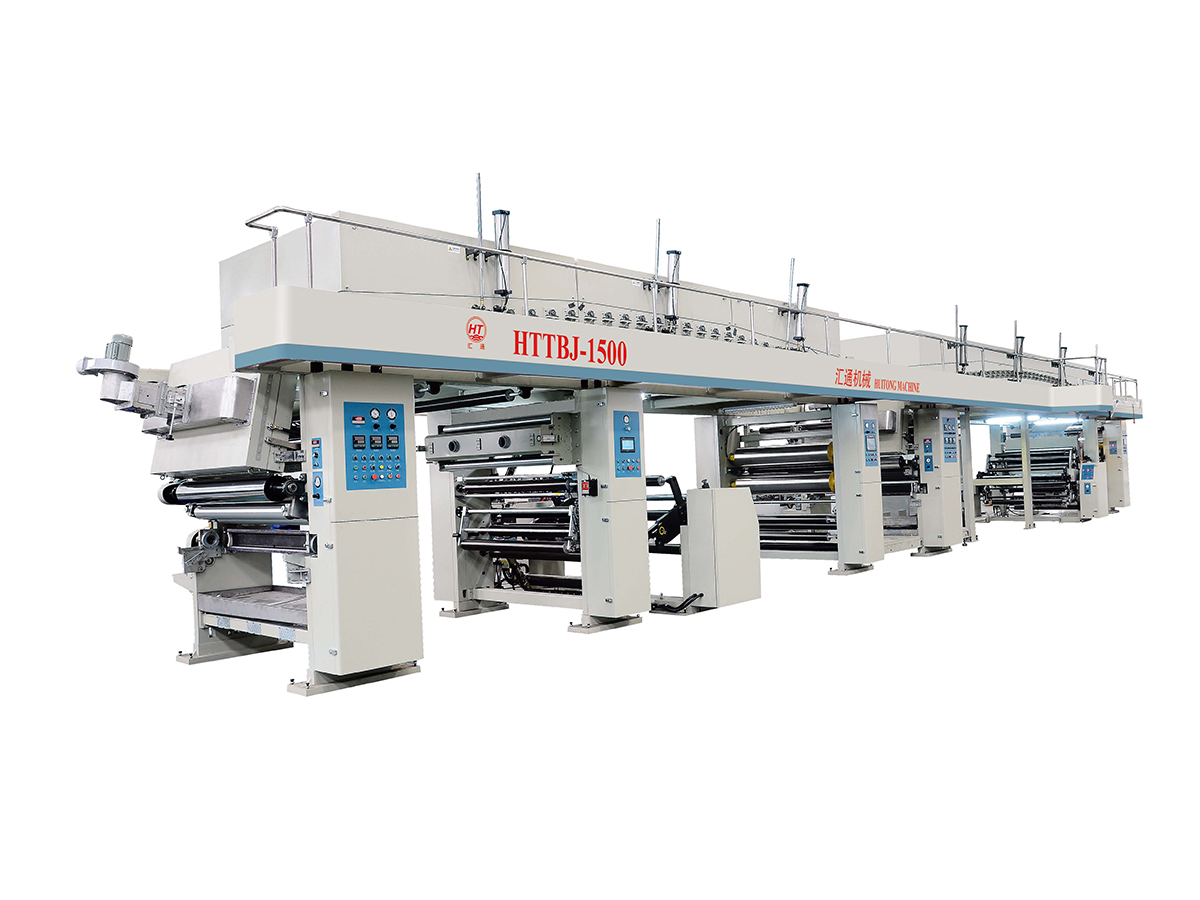
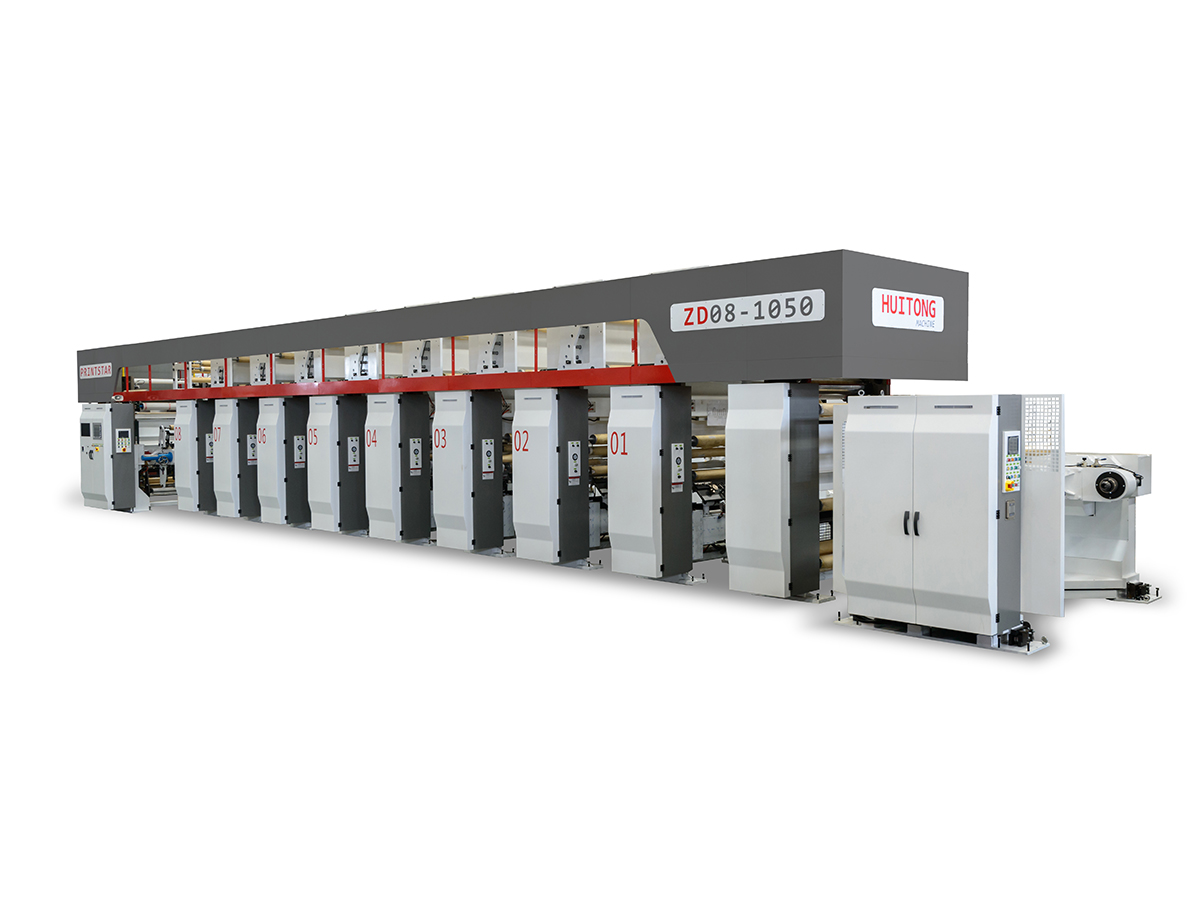
Running at higher line speeds is not simply a matter of turning a motor faster. The ink film, drying capacity, web tension and cylinder balance all have to scale together. A press that handles speed well will keep the web stable, evaporate solvent completely at the exit, and hold registration without visible drift, even when the roll diameter changes during a long run.
Buyers evaluating high-speed equipment usually focus first on speed, but registration stability is what determines whether that speed produces usable output. Misregistration at full speed generates waste, and waste erases the economics of the press. Four factors shape registration performance more than any single headline specification.
Modern lines rely on closed-loop registration control, where mark sensors read the printed position on every color station and feed correction signals back to individual drives. Systems built around a dedicated electronic line shaft can hold tight tolerances even when the web speed changes during acceleration or a splice. When comparing machines, ask how the control loop responds to a sudden speed change, not just what its steady-state accuracy is.
Registration is not a single number on a data sheet. It is the behavior of the whole web path under load, acceleration and temperature change.
A web that flutters between stations causes tension variation, and tension variation causes registration error. Machines designed for high speed usually use a modular frame with reinforced sections, balanced cylinders and dampened drive coupling. Tension zones should be independent so that a disturbance at one unwind does not travel through the entire line.
Drying is often the bottleneck at high speed. Solvent-based inks need enough airflow and heat to fully evaporate before the web is rewound, while water-based systems need longer dwell or more intensive drying to avoid residue. Oven length, zone control and exhaust capacity should be sized against your slowest ink system at your fastest target speed.
Different substrates demand different handling. Polypropylene and polyester films are common in flexible packaging and respond well to standard surface treatment. Aluminum foil is more sensitive to tension and heat, and decorative paper absorbs ink differently, which affects both drying and tone reproduction.
| Substrate | Typical focus | Key handling point |
|---|---|---|
| BOPP film | Food and snack packaging | Surface treatment level |
| PET film | Lamination and rigid-structure packs | Dimensional stability |
| CPP film | Sealable pouches | Heat sensitivity in drying |
| Aluminum foil | Pharmaceutical and tea packaging | Tension control |
| Decorative paper | Furniture and flooring surfaces | Ink absorption and tone |
The same press platform can serve very different markets, but each application places a different weight on speed, precision and substrate. Matching the requirement to the right configuration avoids paying for capability you will not use or, worse, buying a machine that cannot meet the quality bar.
Machine selection starts with output targets, not catalog numbers. The table below groups typical configurations by production profile so you can narrow the field before comparing individual specifications.
| Production profile | Typical speed band | Priority |
|---|---|---|
| Compact, economical output | Around 260 meters per minute | Low entry cost and simple changeover |
| Balanced mass production | Around 300 to 350 meters per minute | Throughput and cost per square meter |
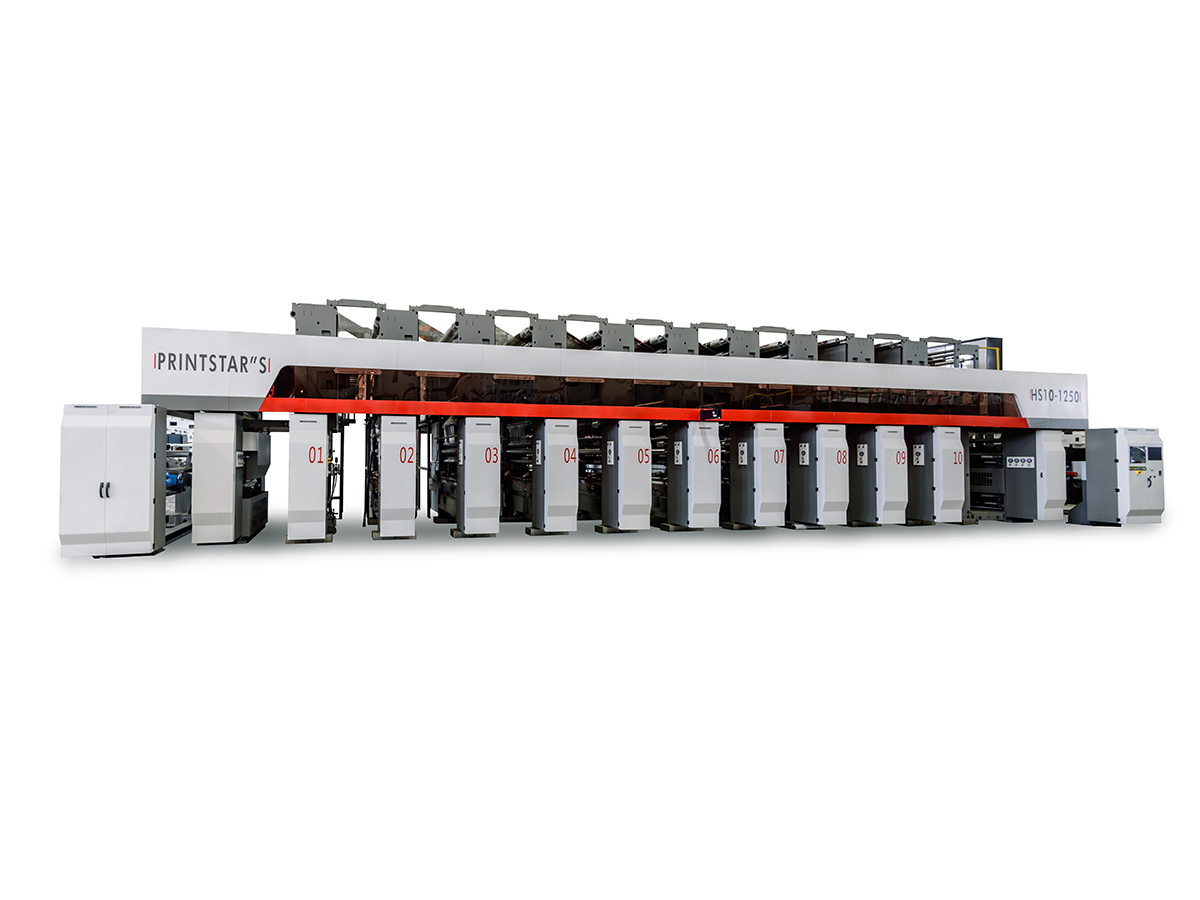
| Maximum throughput lines | Up to 450 meters per minute | Full-load stability and drying capacity |
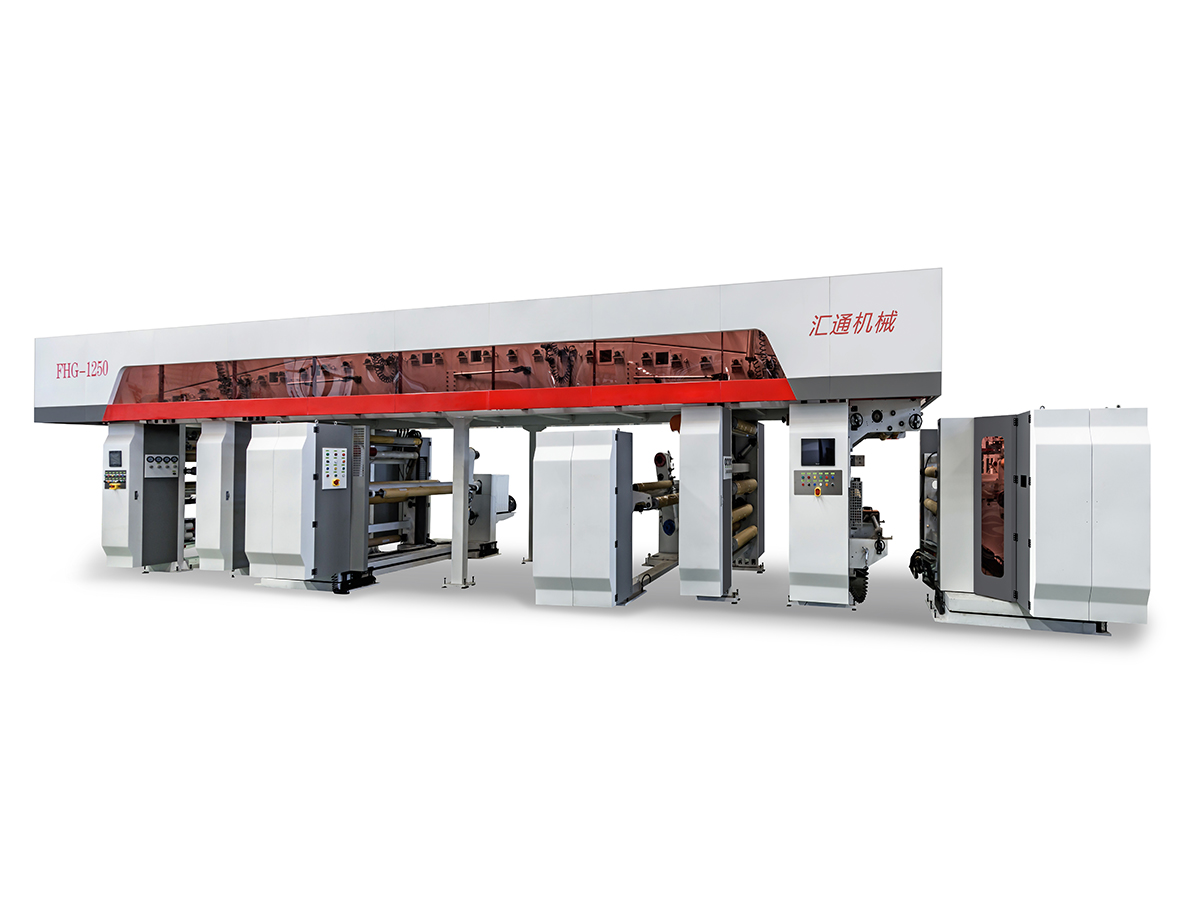
For shops running shorter orders or stepping into gravure from another process, a smaller-roller configuration offers a lower investment with the core registration and drying features intact. The trade-off is a lower ceiling on speed, which suits operations where job count matters more than peak output.
The middle band covers most high-volume flexible packaging work. These lines balance speed, color station count and footprint, and they are the most common choice for converters running continuous food and consumer goods orders.
Top-tier lines are justified when long runs dominate the schedule and the cost of waste or downtime is high. They require more robust drying, tighter control systems and a stronger foundation, so the investment case should be built on sustained utilization rather than peak numbers.
Decorative paper and surface printing use machines tuned for ink absorption, tension on porous stock and tone accuracy. Standard flexible packaging lines are not always the best fit for these materials, so the substrate should drive the specification.
A press is only as dependable as the engineering, manufacturing and service behind it. When evaluating a supplier, buyers should look at how the machine is built, how it is tested before shipment and how it is supported after installation. The following areas carry the most weight in long-term operating results.
Color group count, web width, speed targets and configuration should be adjustable to the actual production plan rather than forced into a fixed template.
Precision machining, balanced cylinder testing and coordinate measurement of critical components reduce vibration and drift once the line is running.
A dedicated research team and a track record of patents indicate whether a supplier is solving real production problems or simply assembling standard parts.
Installation support, operator training and spare parts availability matter greatly on overseas projects, where a delayed part can stop a line for weeks.
A structured comparison keeps the decision grounded in production reality. Use the checklist below to score each candidate machine against your own requirements before requesting a final quotation.
When these points are clear, the remaining question is cost. The most accurate budget comes from a specification review rather than a published figure, because configuration, color count and automation level change the investment substantially.
Speeds in this class typically range from about 260 to 450 meters per minute. The right target depends on your job length, changeover frequency and drying capacity, so it should be chosen against real production data rather than the maximum rating alone.
Yes. Color station count, web width, drive configuration and drying length can generally be adapted to the production plan. A good supplier will review your job mix before proposing a layout.
The main drivers are maximum speed, number of color stations, web width, drying system size and the level of automation in registration and tension control. Because each combination differs, the most reliable figure comes from a detailed specification review with the supplier.
Common materials include BOPP, PET and CPP films, aluminum foil and decorative paper. Each substrate requires specific attention to tension, drying and ink absorption, so the machine should be configured around your primary materials.
At high line speeds, small timing errors become large visible shifts in the print. A closed-loop registration system corrects these errors continuously, which reduces waste and keeps the artwork aligned across the full run.
High-speed rotogravure printing earns its place in volume packaging because it combines sustained output, strong image quality and broad substrate capability. The right choice depends on matching speed, color count, drying capacity and registration control to your actual jobs, and on confirming that the supplier can support the line for its full working life. Start with a clear production profile, score candidates against the checklist above, and then ask for a detailed specification and quotation that reflects your real requirements.
Contact Us
Recommended Products
Joining Hands With Huitong
Customize Your Flexible Packaging Equipment Solution
Inquire now
Products
contact us

Tel: +86-0510-86328508
+86-0510-86324508
Mob: +86-13914908980
Email: [email protected]
ADD: No. 429 Xizhang Road, Gushan Town, Jiangyin City, Jiangsu Province, China

 English
 русский
 Español
 عربى