The pet food industry faces an invisible but critical challenge: keeping products fresh from manufacturing line to consumer bowl. Unlike human snacks, pet food formulations demand exceptional protection against moisture and oxygen infiltration. High-fat content, freeze-dried proteins, and sensitive textures create a unique preservation puzzle that extends far beyond simple packaging choices. The industry recognizes that what appears to be a storage or transportation problem is fundamentally a packaging barrier performance problem.
Approximately 40% of quality complaints in high-humidity environments (above 75% relative humidity) stem from insufficient packaging barrier properties causing premature shelf life degradation. This statistic reveals an uncomfortable truth: even the most carefully formulated products fail when their protective shell becomes compromised. The solution lies not in a single material, but in a systematic approach to multilayer composite structure design and equipment-driven implementation.
For equipment manufacturers, this represents a fundamental opportunity. While material suppliers focus on "what structure barriers well," equipment manufacturers must answer a more complex question: "how do we ensure that good structures actually perform well in production?" The precision of composite tension, coating uniformity, and thermal sealing directly determines whether theoretical barrier values translate into real shelf-life protection.
Pet food formulations present challenges that conventional snack packaging cannot easily address. Understanding these sensitivities is essential for selecting appropriate protective structures.
| Product Category | Core Challenge | Typical Problems |
|---|---|---|
| High-Fat Treats (meat strips, fish snacks) | Lipid oxidation | Oil rancidity, nutrient loss, flavor degradation |
| Freeze-Dried and Baked Treats | Moisture absorption | Loss of crispness, caking, texture degradation |
| Wet and Semi-Wet Foods | Microbial growth plus oxidation | Package swelling, spoilage, safety risks |
Pet formulations typically contain significantly higher fat content than equivalent human snacks, with natural oil coatings and freeze-dried proteins creating additional vulnerability to environmental degradation. Research indicates that 72% of premium pet product consumers expect consistent freshness and aroma from their selected brands. Once packaging integrity fails, brand trust suffers irreversibly.
The relationship between moisture and oxidation deserves particular attention because it is frequently overlooked in conventional barrier discussions. Moisture represents far more than a surface-level "damp package" concern; it actively catalyzes the oxidative cascade that destroys product quality.
This multilayered degradation mechanism explains why moisture control is inseparable from oxygen barrier performance. A packaging system addressing only one factor while neglecting the other creates a false sense of security. Truly effective preservation requires simultaneous protection against both atmospheric moisture and oxygen permeation.
Modern pet food packaging employs a carefully orchestrated division of responsibilities across multiple material layers. Each layer serves a specific function within the total barrier system, and the quality of this integrated architecture determines ultimate shelf-life performance.
| Functional Layer | Typical Materials | Barrier Target | Critical Parameter |
|---|---|---|---|
| Outer Layer | PET, BOPP | Mechanical protection, printability | Strength, gloss, dimensional stability |
| Oxygen Barrier | EVOH, METPET, Aluminum | Oxygen exclusion (OTR) | Less than 10 cm3/m2.24h |
| Moisture Barrier | Same barrier materials | Water vapor exclusion (WVTR) | Less than 1.0 g/m2.24h |
| Sealing Layer | LLDPE, HDPE, sealant | Thermal seal integrity | Seal strength 1.5 N/15mm minimum |
Aluminum foil layers deliver exceptional oxygen resistance (OTR less than 0.5 cm3/m2.24h), preventing lipid oxidation and vitamin loss. For high-fat pet food formulations containing more than 15% fat, maintaining WVTR below 1.0 g/m2.24h and OTR below 10 cm3/m2.24h under high-temperature, high-humidity storage conditions is essential to guarantee shelf life exceeding 12 months.
Not every pet food application requires identical barrier performance. Industry practice recognizes three primary structural configurations, each optimizing different cost-performance relationships:
| Structure Configuration | Barrier Level | Cost Profile | Optimal Applications |
|---|---|---|---|
| PET/PE | Basic moisture protection | Low | Low-fat products, short shelf life |
| PET/METPET/PE | Medium-high barrier | Moderate | Most dry foods and treats |
| PET/AL/PE | Premium barrier | Higher | High-fat formulas, extended shelf life, export |
The selection between EVOH and METPET involves practical trade-offs. EVOH materials support transparent window applications where consumers expect product visibility. METPET provides opaque barrier properties for light-sensitive ingredients requiring UV protection. Neither approach universally surpasses the other; rather, each matches specific product requirements and market positioning strategies.
This section addresses the critical distinction between theoretical barrier ratings and field performance. Material specifications represent potential; equipment execution determines realization. This distinction forms the core competitive differentiation for equipment manufacturers.
Multilayer structures possess theoretical areal density and barrier characteristics. However, these specifications transform into actual protection only when manufacturing equipment operates within exacting parameters. Composite process deviations introduce microstructural flaws that compromise barrier layer integrity.
Composite tension control represents a primary equipment sensitivity. Tension fluctuations create microscopic stress patterns in barrier layers, particularly in metalized or aluminum foil components. These stresses can develop into hairline cracks that become oxygen and moisture pathways despite seemingly adequate base material properties.
Coating uniformity during adhesive application directly affects inter-layer adhesion integrity. Non-uniform coating creates localized delamination points where water vapor and oxygen molecules discover preferential diffusion channels. Advanced coating technologies, including reverse gravure application systems, minimize these vulnerabilities by depositing remarkably uniform adhesive layers across the entire web width.
Solvent-free composite precision eliminates residual solvent pathways that could compromise barrier performance. Equipment featuring advanced coating precision reduces pinhole formation and ensures layer-to-layer bonding consistency that theoretical calculations assume but practical manufacturing must reliably achieve.
Exceptional barrier layer engineering becomes irrelevant if thermal sealing fails. This seemingly simple process—bonding package edges—represents the critical barrier system endpoint. Inadequate seal creates direct atmospheric access regardless of composite quality.
Equipment designers must address the materials-specific sealing windows, coordinating heating profiles with composite material melting characteristics. Misaligned temperature profiles create either incomplete fusions (barrier breaches) or excessive material degradation (mechanical weakness). This balancing act demands sophisticated control systems and process understanding.
Achieving maximum barrier performance once during production represents laboratory success. Maintaining consistent barrier performance across production batches, product variations, and operational conditions represents commercial success. This consistency determines whether brands can confidently promise shelf-life performance to consumers.
Equipment managing this consistency requires:
From the equipment manufacturer's perspective, this represents the fundamental value proposition: transforming packaging potential into consistent, documented reality that brands can confidently commercialize.
The packaging industry increasingly recognizes that premium barrier performance and environmental responsibility need not represent conflicting objectives. Emerging material technologies enable high-barrier properties within simplified, recyclable structures. Equipment manufacturers must adapt to these evolving formulations.
Advanced polyethylene-based barrier structures now achieve performance previously requiring aluminum or METPET layers. These solutions deliver exceptional environmental advantages:
Full polyethylene barrier structures require more precise equipment control than traditional configurations. The processing windows are narrower; extrusion and composite parameters must operate within tighter tolerances. Equipment designed for legacy materials may struggle with these requirements, creating commercial incentive for technology upgrades.
Advanced extrusion equipment featuring:
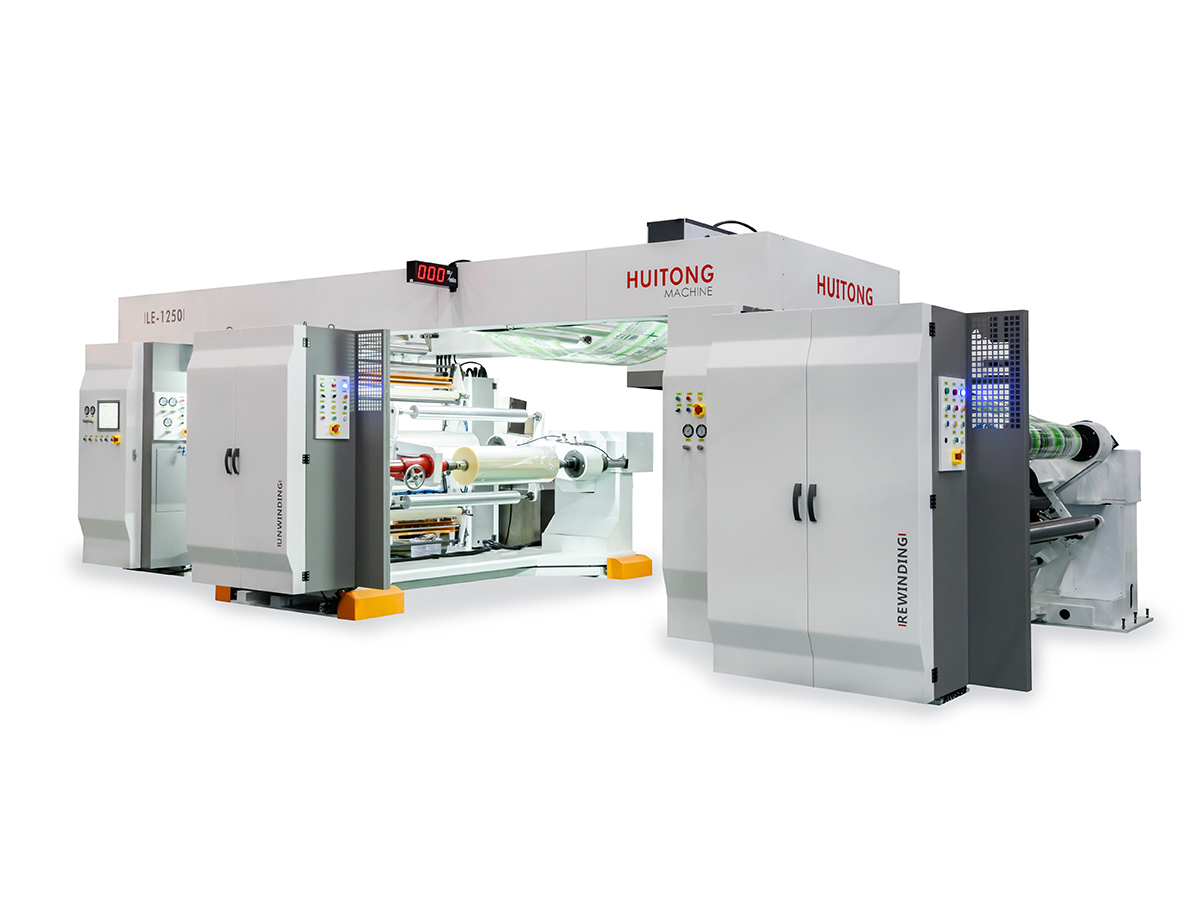
These capabilities position modern laminating machine technology as the enabling platform for next-generation sustainable barrier solutions. Equipment manufacturers adopting these technologies gain significant competitive advantage as brand owners increasingly prioritize environmental performance alongside barrier functionality.
For packaging engineers and production decision-makers evaluating equipment, comprehensive assessment requires understanding how equipment specifications translate into real-world barrier performance.
| Equipment Parameter | Impact on Barrier | Evaluation Method |
|---|---|---|
| Tension Control Stability | Prevents stress-induced barrier layer microcracks | Request tension variation specifications during production runs |
| Coating Uniformity | Ensures consistent inter-layer adhesion across entire web width | Examine cross-machine coating weight variation data |
| Thermal Sealing Precision | Achieves consistent seal strength throughout seal zone | Request seal strength testing across machine direction and edge-to-edge |
| Process Data Capture | Enables performance traceability and continuous improvement | Review available data logging capabilities and reporting functionality |
Equipment selection decisions should prioritize not maximum performance during optimal conditions, but rather consistent performance across normal operational variations. This distinction separates reliable production systems from inconsistent equipment that performs capably only under laboratory conditions.
The contemporary pet food industry understands that product freshness represents a design requirement, not a post-production consideration. Multilayer composite structures provide theoretical barrier potential. Equipment execution determines whether that potential transforms into field reality.
This fundamental principle distinguishes successful brand performances from disappointing shelf-life failures:
When evaluating packaging equipment solutions, the critical question becomes: Is your laminating machine protecting barrier performance, or consuming it through process variability? The most sophisticated material structures cannot overcome equipment limitations. Conversely, properly tuned equipment maximizes even conventionally formulated structures, delivering performance that surprises competitors working with identical material specifications.
The brands winning in premium pet food categories recognize this reality. They invest in equipment technologies that transform material potential into documented, consistent barrier performance. They understand that packaging decisions impact not just shelf appearance, but shelf-life delivery, consumer satisfaction, and ultimately brand loyalty.
For equipment manufacturers, this represents a profound competitive opportunity. Your technical expertise in composite tension, coating precision, and thermal seal consistency addresses the exact questions keeping packaging engineers awake at night. Position your laminating machine not as commodity production equipment, but as the technical foundation enabling brands to confidently promise the freshness that premium pet food consumers expect and deserve.
OTR (Oxygen Transmission Rate) measures how much oxygen permeates through packaging per unit area per unit time, typically expressed as cm3/m2.24h. WVTR (Water Vapor Transmission Rate) measures moisture permeation, typically expressed as g/m2.24h. Both matter because oxygen causes fat oxidation (creating rancid flavors) while moisture catalyzes this oxidation and causes texture degradation in treats. A package with excellent OTR but poor WVTR will fail as moisture penetrates and accelerates oxidative breakdown of fats.
Humidity increases oxygen diffusion rates through food matrices by over 300% as relative humidity increases from 50% to 85%. Moisture hydrates metal ions (iron, copper) that catalyze free radical reactions. Water also breaks down microscopic food structure, exposing previously protected fats to oxygen contact. Additionally, humidity interferes with natural antioxidant systems within the product. These combined mechanisms explain why moisture control is inseparable from oxygen barrier performance.
Assess three variables: product fat content (higher fat needs superior oxygen barrier), desired shelf life (extended shelf life requires lower OTR and WVTR), and storage conditions (high-temperature or high-humidity environments demand better barrier). High-fat formulas requiring 12+ months shelf life typically need PET/METPET/PE or PET/AL/PE structures achieving OTR below 10 cm3/m2.24h and WVTR below 1.0 g/m2.24h. Lower-fat products with shorter shelf life needs may perform adequately with basic PET/PE structures. Consulting with material suppliers and equipment manufacturers provides application-specific guidance.
Thermal seals represent the critical endpoint of barrier protection. Even excellent composite barrier layers become irrelevant if seal integrity fails. Oxygen and moisture can enter directly through compromised seals. Seal strength specifications of 1.5 N/15mm minimum ensure the sealed package resists opening stress during handling without barrier penetration. Equipment controlling thermal sealing parameters (temperature, pressure, dwell time) with precision ensures consistent seal strength, making seal reliability as important as the multilayer composite structure itself.
Manufacturing equipment deviations introduce microstructural flaws that reduce actual barrier performance below theoretical ratings. Composite tension fluctuations create stress patterns in barrier layers that may develop into microcracks. Non-uniform adhesive coating creates localized delamination zones. Improper thermal sealing leaves micro-openings in the seal zone. Humidity variations, material property changes, and contamination introduce additional variables. High-performing equipment minimizes these deviations through tension stability, coating uniformity, and temperature precision, allowing theoretical barrier values to closely approach practical field performance.
Advanced polyethylene structures like MDO PE/PE-EVOH now achieve similar or superior barrier performance compared to aluminum-containing structures (OTR below 0.5 cc/m2.day versus 0.5 cm3/m2.24h for aluminum). The primary advantage is environmental: PE-based structures are mechanically recyclable through conventional post-consumer plastic recovery, while aluminum-containing films are difficult to recycle. The primary equipment challenge with PE structures is narrower processing windows requiring more precise temperature and pressure control. As environmental priorities intensify, expect accelerating adoption of PE-based barrier solutions.
Contact Us
Recommended Products
Joining Hands With Huitong
Customize Your Flexible Packaging Equipment Solution
Inquire now
Products
contact us

Tel: +86-0510-86328508
+86-0510-86324508
Mob: +86-13914908980
Email: [email protected]
ADD: No. 429 Xizhang Road, Gushan Town, Jiangyin City, Jiangsu Province, China

 English
 русский
 Español
 عربى
عربى